WILAYAH NEWS VOICE OF THE GLOBAL AWAKENING


Related Articles
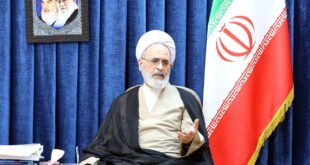
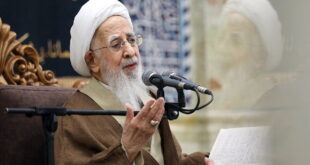
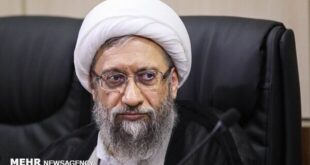
Senior Iranian cleric Grand Ayatollah Abdullah Javadi Amoli has stressed the necessity of conscious and informed participation in Iran’s upcoming February 11 (22 Bahman) nationwide rallies, describing the event as one of the “great religious and revolutionary symbols” of the Islamic Republic.
Hawzah News Agency– Speaking during his advanced jurisprudence class, the prominent Shiite scholar referred to the anniversary of the Islamic Revolution as one of the Divine Days and said the Iranian nation currently faces two major responsibilities: participation in the February 11 rallies and the scholarly and social mission of religious propagation during the holy month of Ramadan.
“We are facing two very important duties,” Ayatollah Javadi Amoli said. “One is the February 11 demonstrations, and the other is your mission of religious propagation in Ramadan, through which you convey the message of the Qur’an and the Ahl al-Bayt to society.”
Condemnation of Modern-Day “Jahiliyyah”
The cleric strongly condemned what he described as manifestations of modern-day jahiliyyah (ignorance), pointing to the conduct of the United States and the Israeli regime.
“Today, ignorance and tyranny are clearly embodied in the behavior of the global hegemonic system, the United States, and the Zionist regime,” he said. “What we see in Gaza is the direct product of this ignorance. Open aggression, occupation, and plunder—what form of ignorance could be clearer than this?”
He emphasized that Islam explicitly commands resistance against such tyranny and injustice.
Role of the Islamic Governance System
Ayatollah Javadi Amoli underlined that the system of Imamate and Ummah was not established solely to manage seminaries or universities, although they fall within its responsibility.
“Combating ignorance is the duty of seminaries and universities, and combating moral recklessness is the duty of mosques and religious centers,” he said. “But confronting and eradicating ignorance itself is a responsibility that only the system of Imamate and Ummah can fulfill.”
He described the February 11 rallies as a powerful public expression of support for the Islamic Revolution and stressed the need for clarity in guiding the movement.
“The people are Muslims; they are Iranians; they are devoted to their homeland; they are willing to sacrifice their lives,” he said. “But above all, Islam teaches them to protect their homeland.”
Defense, Justice, and Social Responsibility
Referring to the teachings of the Ahl al-Bayt, Ayatollah Javadi Amoli said defending one’s life, property, family, dignity, and homeland is a clear Islamic obligation. Quoting Imam Jafar al-Sadiq (peace be upon him), he emphasized that anyone killed while defending their family or property against injustice is considered a martyr.
He also stressed the duty to confront corruption, citing a historic ruling by the late scholar Akhund Khorasani that exposing corruption and embezzlement is obligatory when it harms the dignity of Islamic society.
“Silence in the face of corruption paves the way for its spread,” he said, adding that scholars bear responsibility for both clarification and action.
Islamic Justice Beyond Religious Boundaries
Highlighting the social justice model of Imam Ali (peace be upon him), Ayatollah Javadi Amoli recalled narrations in which the Imam ordered financial support from the public treasury for an elderly Christian man unable to work.
“This shows that in the logic of Imamate, human dignity and poverty alleviation transcend religious boundaries,” he said. “An Islamic government must not allow any human being to be abandoned in deprivation.”
Call for Scholarly Depth in Ramadan
As the holy month of Ramadan approaches, the senior cleric urged religious scholars to use the period as an opportunity for research, study, and the production of lasting scholarly works.
“A single season of propagation should result in at least one enduring academic contribution,” he said. “Repeating superficial material is inconsistent with the dignity of the seminary.”
Final Emphasis on Awareness and Presence
In his concluding remarks, Ayatollah Javadi Amoli stressed that safeguarding Iran’s historic migration toward the system of Imamate and Ummah requires two essential pillars: learned propagation and conscious public presence.
“The February 11 rallies symbolize this presence,” he said, expressing hope that scholars, officials, and the public would act with wisdom, foresight, and adherence to the teachings of the Ahl al-Bayt to ensure dignity, prosperity, and the preservation of the Islamic Republic under the protection of Imam Mahdi (may God hasten his reappearance).
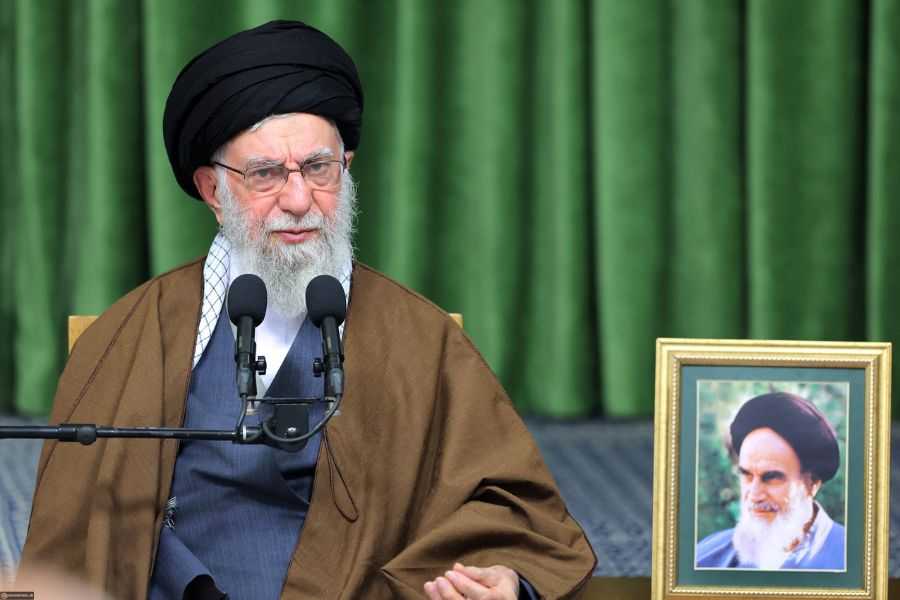
WORLD’S URGENT NEED: A JUST ISLAMIC NATIONAL AND GLOBAL ORDER
The Basij: THIS EMPOWERING NATIONAL ASSET MUST ENDURE FOR FUTURE GENERATIONS
The Supreme Leader of the Islamic Revolution in a live televised program
I am true to my promise
Hezbollah is Not Neutral in Any War on Iran: Sheikh Qassem
Sheikh Qassem Voices Pride in Hezbollah Relation with Iran: Israeli Withdrawal is Lebanon’s Priority

Sayyed Abdulmalik Condoles Hamas, Reaffirms Support for Palestinian Resistance

We invite you to financially support the Al-Wilaya News website.
https://wilayah.info/ar/
@@@@@@@@@
Sayyed Abdulmalik Condoles Hamas, Reaffirms Support for Palestinian Resistance
Baghdad welcomes resumption of Iran-US negotiations
Global Intellectuals Hail Ayatollah Khamenei’s Courage and Resistance to
Hadramawt Governor Reveals Details of British Colonial Crimes in Yemen’s
Welcoming the Month of Ramadan
Hello, O Month of Goodness — Welcome, O Month of Blessings
asting in the Month of Ramadan Is One of the Most Important Deeds on the Path to God
The Twelver Doctrine in the Daily Prayer Allah is greater than everything, or greater than being described
Doubts and Responses – Sayyid Sami al-Badri Commentary on the doubt
Forty Hadiths from Imam al-Ridha on Imam al-Mahdi (peace be upon him
Medical Ethics in Islam
What are the Social Consequences of Enjoining Good and Forbidding Evil
The Fighters and Spending Night in Worship
Interpretation of Unfamiliar (Rare) Words in the Qur’an
With Medicine in the Holy Qur’an – Dr. Muhammad Ali Al-Bar
The Story of Moses in the Qur’an According to its Historical Sequence
@