WILAYAH NEWS VOICE OF THE GLOBAL AWAKENING


Related Articles


1 More than 183 years missing from the history of Islam… Where did they disappear?
This research is worthy of reading and deep reflection.
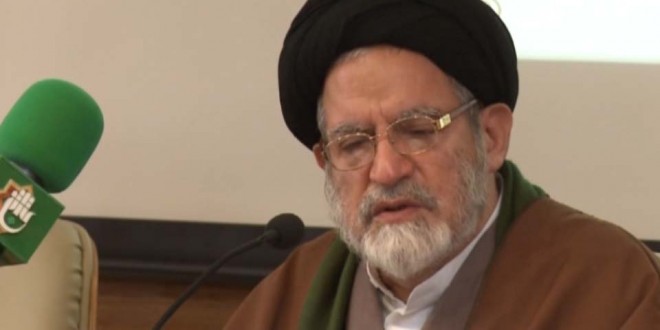
Ayatollah Sayyid al-Jalali.
More than 183 years missing from the history of Islam… Where did they disappear? (1)
I would like to draw the attention of everyone who reads this topic that I do not intend to offend or insult anyone—especially scholars and jurists, regardless of their status. This is an objective, scientific, historical study that raises questions and requires clear answers that leave no room for doubt, to the extent of the questions and question marks I will present, which are of great importance from my point of view…!!!
The topic:
The overwhelming majority of Muslims rely, with complete and unquestioned dependence according to what they believe, on references and books such as Sahih Muslim, Sahih al-Bukhari, al-Tirmidhi, and others for the hadiths of the Prophet (peace be upon him). Let us look at these historical facts:
The Prophet (peace be upon him) passed away in the year 11 AH.
Sahih al-Bukhari: Its author is Muhammad ibn Isma‘il ibn Ibrahim ibn al-Mughirah ibn Bardizbah al-Ju‘fi, known as al-Bukhari. He was called al-Bukhari after his origin and birthplace in the city of Bukhara in Greater Khorasan (present-day Uzbekistan). He was born in 194 AH and died in 256 AH (aged 62). He was born 183 years after the death of the Prophet.
Sahih Muslim: Its author is Abu al-Husayn Muslim ibn al-Hajjaj al-Naysaburi, born in the city of Nishapur in Persia in 206 AH, and he died there in 261 AH (aged 54). He was born 195 years after the death of the Prophet.
Sunan al-Nasa’i: Its author is Abu ‘Abd al-Rahman Ahmad ibn Shu‘ayb ibn ‘Ali ibn Bahr ibn Sinan al-Nasa’i, born in 215 AH in the city of Nasa’, a well-known town in Khorasan (present-day Uzbekistan). He died in the city of Ramla in Palestine in 303 AH (aged 88). He was born 204 years after the death of the Prophet.
Al-Tirmidhi: Its author is Muhammad ibn ‘Isa ibn Sawrah ibn Musa ibn al-Dahhak al-Sulami, known as Abu ‘Isa al-Tirmidhi, born in Tirmidh, a city in southern Uzbekistan, in 209 AH, and he died in 279 AH (aged 70). He was born 198 years after the death of the Prophet.
Ibn Majah: Its author is ‘Abdullah Muhammad ibn Yazid ibn Majah al-Rabi‘i al-Qazwini, born in Persia in 209 AH and died in Ramadan 273 AH (aged 64). He was born 198 years after the death of the Prophet.
These gentlemen are among the most important foundational references of hadith. They are believed to be the most truthful transmitters, and all scholars of the Ummah have agreed upon the authenticity and reliability of their transmission and documentation of all the hadiths of the Messenger (peace be upon him). All of them were not Arabs. I do not intend to question their faith, but they were not Arabs—that is, they were not born in the land of the Arabian Peninsula, the origin and cradle of Islam.
Now, let us look at what is more important:
Do you realize what the numbers (183, 195, 204, 198) years mean in human life? Biologists have determined that the time span of a generation is 33 years. This means that the gap between the death of the Prophet and the emergence of these hadith compilers is six generations. Time evolves and people change, in addition to the personal transformations of hadith narrators, whose consistency and continuity cannot be fully trusted. A person may be sane today and insane tomorrow; corrupt and immoral today and then transform into a pious and God-fearing person tomorrow. Humans are inherently sinners who err and make mistakes; they combine good and evil, right and wrong, good deeds and bad deeds—they are not infallible angels, immune from error. Therefore, our subject and the core of the disagreement is the existence of more than six generations and years—an entire historical period that is missing, about which no one truly knows anything, and which is not firmly established by scientific evidence and proofs that admit no doubt or ambiguity. To be precise, al-Bukhari, Muslim, al-Nasa’i, al-Tirmidhi, and Ibn Majah—all of t
hem neither saw, nor knew, nor lived with the Prophet; indeed, they were not even born during the time of the Prophet, nor during the time of his Companions, nor even during the time of the Followers (Tabi‘in).
Abu Bakr al-Siddiq – ruled from 11 AH to 13 AH = 632 CE
‘Umar ibn al-Khattab – ruled from 13 AH to 23 AH = 634 CE
‘Uthman ibn ‘Affan – ruled from 23 AH to 35 AH = 644 CE
‘Ali ibn Abi Talib – ruled from 35 AH to 40 AH = 661 CE
Mu‘awiyah ibn Abi Sufyan – 41–60 AH = 661–680 CE
Yazid I ibn Mu‘awiyah – 60–64 AH = 680–683 CE
Mu‘awiyah II ibn Yazid – 64 AH = 683–684 CE
Marwan ibn al-Hakam – 64–65 AH = 684–685 CE
‘Abd al-Malik ibn Marwan – 65–86 AH = 685–705 CE
Al-Walid I ibn ‘Abd al-Malik – 86–96 AH = 705–715 CE
Sulayman ibn ‘Abd al-Malik – 96–99 AH = 715–717 CE
‘Umar ibn ‘Abd al-‘Aziz – 99–101 AH = 717–720 CE
Yazid II ibn ‘Abd al-Malik – 101–105 AH = 720–724 CE
Hisham ibn ‘Abd al-Malik – 105–125 AH = 724–743 CE
Al-Walid II ibn Yazid II (killed) – 125–126 AH = 743–744 CE
Yazid III ibn al-Walid I – 126 AH = 744 CE
Ibrahim ibn al-Walid I (killed) – 126–127 AH = 744 CE
Marwan II ibn Muhammad (killed) – 127–132 AH = 744–750 CE
‘Abdullah ibn Muhammad – al-Saffah Abu al-‘Abbas – 132 AH – …
If you’d like, I can also:
polish this into academic English,
keep it neutral and literal, or
adapt it for publication or debate-style writing.