WILAYAH NEWS VOICE OF THE GLOBAL AWAKENING



Related Articles
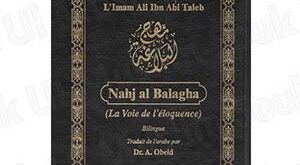
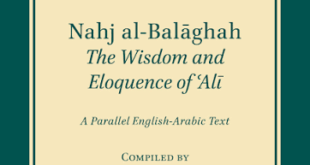
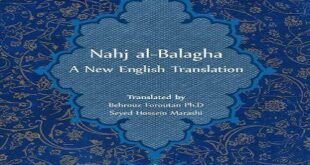
### **Translation: Sharh Nahj al-Balagha – Ibn Abi al-Hadid – Vol. 1**
[The text discusses the definition of faith (Iman)]:
…whether they limit it [faith] to it [inner conviction] alone, as is the doctrine of the **Ash‘arites** (1) and the **Imamiyyah** (2); or whether other matters are included with it, namely performing obligatory duties and avoiding detestable acts, as is the doctrine of the **Mu‘tazilites** (3). None among the majority of theologians (*Mutakallimun*) disagree on this issue except for the **Karramiyyah** (4), for according to them, a hypocrite is called a “believer.” They looked only at the outward appearance, and thus considered the verbal utterance [of faith] alone to be faith.
The term *midhah* (eulogy/praise) refers to the “mode” of praising, just as *rikbah* is the mode of riding (*rukub*) and *jilsah* is the mode of sitting (*julus*) (5). This meaning is very common, and there is much regarding it in the Mighty Book [the Qur’an], such as His saying: *”And if you should count the favor of Allah, you could not enumerate them”* (6). It is also found in the Prophetic traditions: *”I cannot enumerate Your praise; You are as You have praised Yourself.”* Writers (7) have composed so much on this that it would take long to mention, but among the finest examples is the saying of one of them: *”Praise be to Allah for His blessings, among which is His enabling us to strive in praising them, even if we are incapable of counting or enumerating them.”*
**Al-Khansa’ bint ‘Amr ibn al-Sharid said:**
*No hand of a man reaching for glory has ever attained it,*
*Except that what you have attained is even longer [greater].* (8)
*No eloquent praisers have composed a eulogy,*
*Even if they were elaborate, except that what is in you is more excellent.*
Among the most beautiful expressions I have encountered regarding the glorification of the Creator (Mighty and Majestic is His Glory) using the word “Praise” (*Al-Hamd*) is the saying of a learned scholar in the prologue of a scientific poem (*Urjuza*):
*Praise be to Allah, in accordance with the measure of Allah,*
*Not the measure of the capacity of the finite servant.*
*Praise be to Allah, whose proof is,*
*That there is no state in which He is not present.*
*Praise be to Allah, whom he who denies Him,*
*Only denies the one who perceives/imagines Him.*
As for his [Imam Ali’s] saying: **”Whom the heights of ambition cannot reach,”** he means that the efforts of observers and thinkers, no matter how high or far-reaching they may be, cannot grasp Him (Exalted is He), nor can they encompass Him. This is true because everything that can be conceived must be either perceived by the senses, imagined, or present in the innate nature of the soul—and induction (*istiqra’*) bears witness to this.
* **Example of the sensed:** Blackness or sourness.
* **Example of the imagined:** A flying human or a sea of blood.
* **Example of the innate:** The perception of pain or pleasure.
Since the Creator (Glory be to Him) is beyond all of this (2), He cannot be [visually or mentally] conceived.
Regarding his saying: **”Whose description has no defined limit,”** he means by “description” here His essence (*kunh*) and reality. He is saying: His essence has no limit by which it can be known through analogy to limited things, for He is not a composite being (*murakkab*), and everything that is limited is composite.
Then he said: **”Nor an existing attribute,”** meaning He is not perceived by a formal definition (*rasm*), as things are perceived through their definitions—which is to know a thing by its necessary properties and characteristics.
Then he said: **”Nor a counted time, nor an extended term,”** which is an allusion to the refutation of those who say: “We [see Him in time]…”
—
### **Footnotes Summary:**
1. **Ash‘arites:** Followers of Abu al-Hasan al-Ash‘ari. They affirm eternal attributes for God (Knowledge, Power, Life, etc.).
2. **Imamiyyah:** Those who uphold the Imamate of Ali (AS) after the Prophet (PBUH).
3. **Mu‘tazilites:** Known as the “People of Justice and Monotheism” (*Ahl al-‘Adl wa al-Tawhid*).
4. **Karramiyyah:** Followers of Muhammad ibn Karram. They affirmed attributes but eventually fell into anthropomorphism (*tajsim*) and comparison (*tashbih*).
*(Note: Footnotes 5-8 provide linguistic variations and source citations for the poetry and Qur’anic verses mentioned.)*