arewell to an Exceptional Historical Leader and a Testimony to a Pivotal Phase in the Region’s History
53 seconds ago
News and analysis أخبار وتحاليل
0 Views
### Farewell to an Exceptional Historical Leader and a Testimony to a Pivotal Phase in the Region’s History
**July 3, 2026**
**By: Mohammed Al-Ayoubi**
History does not write the biographies of leaders at the moment of their departure; rather, it often begins writing the most complex chapter of their lives after their absence. From this perspective, when nations stand on the threshold of losing great leaders, they are not merely saying goodbye to individuals; they are testing their own self-awareness, re-evaluating their trajectory, and anticipating the horizons of their future.
In this context, the farewell to Grand Ayatollah Imam Sayyid Ali Khamenei is more than just a transitional event in the path of a state or a group; it is a watershed moment in the consciousness of an entire nation and a sign of the end of a phase rife with transformations in one of the world’s most complex and turbulent regions. Regardless of differing positions on his experience, and regardless of varying interpretations of his legacy, the central question remains: How can one understand this man’s presence in shaping the features of the region over the last four decades? And what lessons can be drawn from his journey, whether in terms of state-building, conflict management, or proposing an alternative civilizational vision in the face of Western hegemony?
**An Exceptional Personality in Exceptional Time and Place**
What distinguishes the Martyr of the Nation, Sayyid Ali Khamenei, from other contemporary world leaders is that he combined multiple dimensions in his personality that rarely come together in a single leader. On one hand, he was a religious authority (Marja’) carrying the banner of jurisprudential and fundamentalist *Ijtihad*. On the other, he was a political leader who assumed the highest executive position in a system based on the “Guardianship of the Jurist” (*Wilayat al-Faqih*). Furthermore, he was a revolutionary and ideological symbol who, for decades, represented the boldest face in the confrontation against imperialism and Western hegemony—not just in his rhetoric, but in his actions, decisions, and strategic directives.
Combining these three roles—religious, political, and revolutionary—constitutes a rare phenomenon in the modern era, where most leaders have been confined to only one of these spheres. Imam Khamenei, however, managed to maintain a complex balance between them, translating each into a practical context that impacted the reality of people’s lives. Therefore, when we speak of bidding farewell to Sayyid Khamenei, we are speaking of bidding farewell to a system unto itself, to an integrated intellectual framework, and to a political project that transcended the limits of time and place to reside in the conscience of millions across the Islamic world and beyond.
From his days of imprisonment and harassment during the Shah’s era, through his prominent role in the Islamic Revolution, then assuming leadership after the passing of Imam Khomeini (may his soul be sanctified), to his management of the state in the darkest of circumstances involving wars, blockades, and sanctions—the man’s journey was filled with milestones that provide rich material for historians, political scientists, and sociologists of history. Yet, what is striking is that this journey was not merely the biography of one man, but a mirror to the development of an entire political collective, and the transformations of a society in the midst of a struggle over identity, modernity, and independence.
**The Philosophy of Resistance: Theory and Practice**
If there is a key to understanding Khamenei’s political thought, it is the concept of “resistance” as a comprehensive project, not merely a military or political reaction. In his view, resistance is not an end in itself, but a means to achieve national independence, restore dignity, and build a non-subservient development model that relies on internal capabilities and believes that true liberation begins with the liberation of the mind and knowledge before the liberation of land and institutions.
Here lies the profound paradox in his discourse: despite his sharp revolutionary tone, he remained deeply realistic in his diagnosis of the challenges facing the Islamic world. He did not settle for denouncing Western hegemony; rather, he provided a precise diagnosis of the causes of backwardness and weakness, placing science and knowledge at the forefront of the renaissance. This linkage between the ideological dimension and the practical dimension is what gave his project a degree of continuity and influence, despite all the pressures and criticisms he faced.
His repeated call for an “Islamic civilizational renaissance” was not merely an emotional slogan, but a methodological vision based on restoring respect for reason, *Ijtihad*, and innovation, and overcoming the state of intellectual stagnation suffered by some traditionalist currents. In this context, he viewed the passive consumption of Western achievements, without parallel knowledge production, as itself a form of masked dependency, and that true liberation is only achieved when Muslims become producers of civilization, not just consumers of it.
From this standpoint, the Palestinian cause maintained a fixed position in Iranian political discourse throughout the leadership of Imam Khamenei. Tehran considered the Palestinian-“Israeli” conflict a central issue in the region and linked its support for Palestinian factions to its vision for confronting “Israeli” and American influence.
Conversely, this position formed one of the most prominent causes of the ongoing tension between Iran on one side, and the United States and “Israel” on the other. It also reflected on the nature of Iranian relations with a number of Arab countries, especially with the increasing regional polarization over the past two decades.
The war in Gaza and the subsequent developments in the region contributed to re-raising old questions about the future of the conflict and the role of regional powers in determining its path, which made the policies associated with the era of Imam Khamenei a subject of continuous interest and analysis.
**Civilizational Vision and Questions of Unity and Diversity**
Perhaps one of the most striking aspects of Imam Khamenei’s thought is his insistence on the idea of a “single *Ummah*,” and the need to overcome sectarian and national differences, which he saw as an existential threat to the cohesion of the Islamic world and a tool serving its enemies. He viewed sectarian divisions as instruments of Western hegemony, which exploited the internal diversity of Islamic societies to tear them apart, weaken them, and turn them into theaters for proxy wars.
However, the question that remains open is: How can this call for unity be reconciled with the reality of the sectarian and political diversity that defines the region? Can an Islamic unity be built without acknowledging the diversity of readings and interpretations? Here, Imam Khamenei tended toward a unifying vision based on major commonalities—foremost among them Islamic creed, resistance to hegemony, and moral values—without ignoring the necessity of dialogue, mutual acquaintance, and cooperation between different components. But the question of how to translate this vision into reality remains one of the most problematic questions in evaluating his experience.
As for issues of society and women, Imam Khamenei presented a conciliatory vision attempting to escape the dichotomy of marginalization and consumerist saturation. He rejected the reduction of women to a commodity, just as he rejected the marginalization of their role in public life, and insisted on considering them an essential partner in the renaissance.
**Management and Crises: Testing Leadership in Exceptional Circumstances**
If philosophy and theories are the theoretical framework for a leader, the true test lies in the ability to manage crises and lead the state under emergency conditions. In this regard, Sayyid Khamenei appears as a rare example of a leader who managed to maintain the cohesion of institutions and the continuity of the strategic vision, despite all the storms that buffeted Iran and the region over three and a half decades.
The war with Iraq, harsh economic sanctions, escalating international pressures, internal social unrest, and successive regional challenges—all were tests that Iran underwent during the era of Imam Khamenei, emerging from them with varying degrees of success and failure. But what is worth contemplating here is the regime’s ability to adapt and survive, failing to collapse despite all the Western expectations that bet on its demise at various stages.
This resilience is not coincidental; it reflects institutional depth, popular extension, and a close link between the leadership and a social base that views itself as part of a historical project, not just a marginal political system. This bond is what made transformations in Iran take on a cumulative, rather than an explosive, character, despite the intensity of internal and external conflicts.
**The Funeral Procession: An Exceptional Event by All Measures**
What gives the departure of Imam Khamenei a special and distinct character is the circumstances of his martyrdom in direct confrontation with external aggression, making him the first major Islamic authority to ascend as a martyr in the field of war against “Israel” and America in the modern era. This fact alone is sufficient to transform the funeral ceremonies from a mere normal farewell into an exceptional historical event, carrying symbolic, religious, and political dimensions that transcend the boundaries of geography and time.
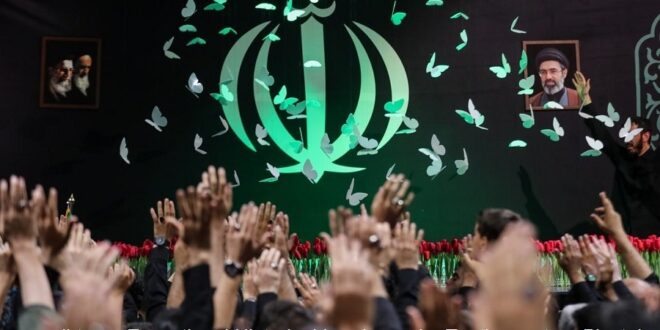
Data indicates that the funeral ceremonies, which begin on the upcoming fourth of July and continue for six days between Iran and Iraq—including cities such as Tehran, Qom, Najaf, Karbala, Mashhad, Beirut, and Sanaa—will be the largest and most extensive in the history of the region. This is not only in terms of the millions-strong crowds, but in terms of the geographical reach and the religious and political symbolism carried by each of these stations.
The presence of Najaf and Karbala alongside Tehran, Mashhad, Beirut, and Sanaa reflects the depth of spiritual and cultural cohesion between Iran, Iraq, Lebanon, Yemen, and Palestine, and confirms that the event does not concern a specific state alone, but includes a broad Islamic depth that feels the late leader was a loud voice against injustice and arrogance, and a firm hand raising the banner of pride and dignity. Even the demands of tribes, scholars, and Iraqi elites to host the funeral ceremonies, in the absence of official representation by some states due to the circumstances of the confrontation, confirm that the stature the deceased occupied transcends the borders of the nation-state and falls within a broader framework of religious, cultural, and political belonging.
It is expected that this funeral will turn into an “awakening” event that reproduces a state of mass mobilization, confirming that the path of resistance did not end with the departure of its leader, but will enter a new phase of challenge and continuity. The choice of the slogan “We Must Rise” and the symbol of the “Clenched Fist” reflects an awareness among those organizing the ceremonies that the scene must be presented as a continuation rather than an end, and as the beginning of a new phase in the history of the nation, not the conclusion of an individual’s journey.
**Legacy Between Historical Evaluation and Future Projections**
In the midst of this majestic scene, the most pressing question remains: How will history read the experience of Imam Khamenei? Will his image remain as it is in the collective conscience, or will it undergo a reconfiguration as time passes?
The truth is that any serious historical evaluation requires sufficient time distance and a precise dismantling of contexts, between theoretical vision and practical application. Imam Khamenei, like other great leaders, was a son of his environment; his vision was shaped in interaction with the challenges of his era, and he responded to pressures and hypotheses that were not all within his control.
However, what can be affirmed now is that the man left an indelible mark on the transformations of the “Middle East,” and his name will remain associated with the meanings of resistance, independence, and the rejection of hegemony, whether those who agree with him agree, or those who disagree with him disagree. Furthermore, his experience will remain a fertile subject for students and researchers in the fields of international relations, political sociology, the philosophy of revolutions, and political theory in Islam.
In the end, the departure of Imam Ali Khamenei remains a watershed moment in the history of Iran and the Islamic world, and indeed in the history of the entire region. The man who spent decades crafting an ambitious political and intellectual project was not just an ordinary leader; he was an exceptional, complex phenomenon that reflected the complexities of his region and the world, answered great questions, and simultaneously raised even greater ones.
History may be the final judge, but there is no doubt that this figure contributed to shaping the consciousness of an entire generation, inspired millions on the paths of liberation and dignity, and left a legacy of ideas and experiences that will remain a subject of dialogue, criticism, and inspiration for generations to come. And even if the current scene is one of farewell, the lessons drawn from this journey will remain alive, renewing themselves with every new station in the nation’s path toward reclaiming its civilizational role. From this perspective, the farewell to Imam Sayyid Ali Khamenei is not only the farewell of a personality who played a pivotal role in the history of Iran, but is also a testimony to a pivotal phase in the history of the region, which will remain a subject of study and analysis for many years to come.
 WILAYAH NEWS VOICE OF THE GLOBAL AWAKENING