WILAYAH NEWS VOICE OF THE GLOBAL AWAKENING


Related Articles



From India to Kush: Netanyahu’s Project to Encircle the Region and Turn the Conflict into Aggressive Alliances
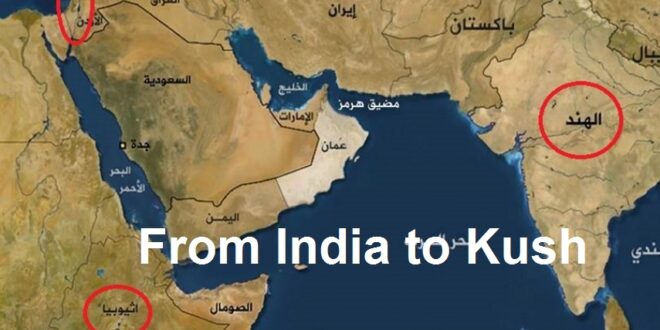
Time – Amid the ongoing war and tensions ignited by Benjamin Netanyahu’s policies, the Israeli Prime Minister has presented a new project for a regional alliance stretching “from India to Kush,” symbolically referring to a broad geographical area encompassing Asia, Africa, and the Middle East. This proposal cannot be separated from the broader context in which the region finds itself, as Israel seeks to reshape the strategic environment in ways that serve its security and political interests, even at the expense of regional stability. This project is not just a typical diplomatic initiative but reflects an expansionist vision aimed at encircling adversaries and redrawing the map of alliances through a narrow security lens. This move comes at a time when Israel faces growing international criticism over its military policies, making this project a clear attempt to escape isolation by creating a new political reality that imposes itself as a fait accompli, rather than addressing the root causes of the ongoing crisis.
Using Geography to Serve the Agenda of Conflict
This proposal cannot be regarded as a mere geographic description; it carries a clear political message with deep and dangerous strategic implications. It signals a move toward creating an alliance spanning vast areas and multiple regions, reflecting Israel’s desire to transcend its traditional boundaries and build a multi-faceted and internationally influential network, with military and political clout. This direction reveals an attempt to redefine the regional conflict, not as a localized issue tied to occupation and Palestinian rights, but as part of a broader confrontation with what Israel labels as hostile blocs. This shift in rhetoric reveals a clear effort to expand the scope of the conflict and internationalize it, turning it into a part of complex global alliances, rather than remaining a political and ethical issue related to ending occupation and achieving justice. Additionally, this proposal seeks to create the impression that Israel is not an isolated party, but the center of a wide regional alliance, which serves Netanyahu’s goals of consolidating his political position both domestically and internationally.
Manufacturing the Enemy as a Means to Justify Aggression
Netanyahu’s proposed project relies on the idea of “hostile axes,” whether Shiite or Sunni, a classification that reflects a clear attempt to frame the conflict within a security narrative that serves Israel’s interests. This narrative portrays Israel as a besieged and threatened state, despite possessing one of the strongest military capabilities in the region. This approach is not about achieving peace but creating a constant state of tension that justifies the continuation of military policies and security expansion. Furthermore, this rhetoric deepens regional divisions rather than working towards building bridges of understanding. By exaggerating threats, Netanyahu aims to garner international and regional support for his projects, exploiting the fears of some countries regarding regional changes. However, the truth remains that this approach reinforces the climate of conflict and delays any real chance for stability, as it prioritizes confrontation over dialogue.
Alliances as a Cover to Ignore Crimes and Violations
This project cannot be separated from the ground reality, which witnesses an unprecedented escalation in Israeli military operations, resulting in a large number of casualties and widespread destruction of infrastructure. In this context, Netanyahu seems to be using the concept of alliances as a way to alleviate mounting international pressure on him. Instead of confronting criticism related to violations, he seeks to shift the discussion to security issues and strategic alliances. This strategy aims to reframe Israel as a necessary partner in confronting regional threats, rather than being seen as a party responsible for escalating violence. This approach also reflects an attempt to shift international priorities, focusing on alliances rather than accountability. However, this tactic does not change the fact that the continuation of aggressive policies deepens the crisis and increases Israel’s isolation in the long term, no matter how much it tries to mask this behind slogans of cooperation.
Domestic Political Objectives Behind External Escalation
The internal dimension of this project cannot be ignored, as Netanyahu faces significant political and legal challenges threatening his political future. In such circumstances, leaders often resort to escalating external rhetoric to strengthen their domestic position. Proposing a wide alliance project gives Netanyahu an opportunity to present himself as a strong leader capable of building strategic alliances, rather than appearing as a leader trapped in crises. This approach also helps unite Israeli public opinion around the idea of an external threat, reducing focus on his internal issues. However, this political use of alliances reflects a dangerous reality, namely that critical decisions concerning the region may be driven by personal and political calculations rather than a genuine vision for peace. This makes the project a source of concern, as it could lead to further escalation rather than de-escalation.
The Future of the Region Between Hegemonic Projects and the Right of Peoples to Peace
Netanyahu’s proposed project reflects a vision based on military power and alliances, rather than justice and political solutions. This vision does not offer a true solution to the conflict but seeks to manage it in ways that serve Israel’s interests. However, history has proven that alliances based on fear and enmity cannot bring about lasting stability. True peace cannot be built on ignoring the rights of peoples or imposing facts on the ground by force. Moreover, attempting to expand the conflict and transform it into a regional confrontation will only lead to increased tension and suffering. The future of the region must be based on principles of justice and mutual respect, not on hegemonic and control-oriented projects. In light of the continuation of these policies, it is clear that the “from India to Kush” project is not a peace initiative, but rather a new attempt to reproduce the conflict in a wider and more dangerous form, threatening the stability of the entire region.