WILAYAH NEWS VOICE OF THE GLOBAL AWAKENING


Related Articles

Wilayah News
Home / Imam Khamenei / Imam Khamenei: Women’s Rights in Islam Surpass Any Flawed Western Logic
Imam Khamenei: Women’s Rights in Islam Surpass Any Flawed Western Logic
2025-12-03
Imam Khamenei: Women’s Rights in Islam Surpass Any Flawed Western Logic
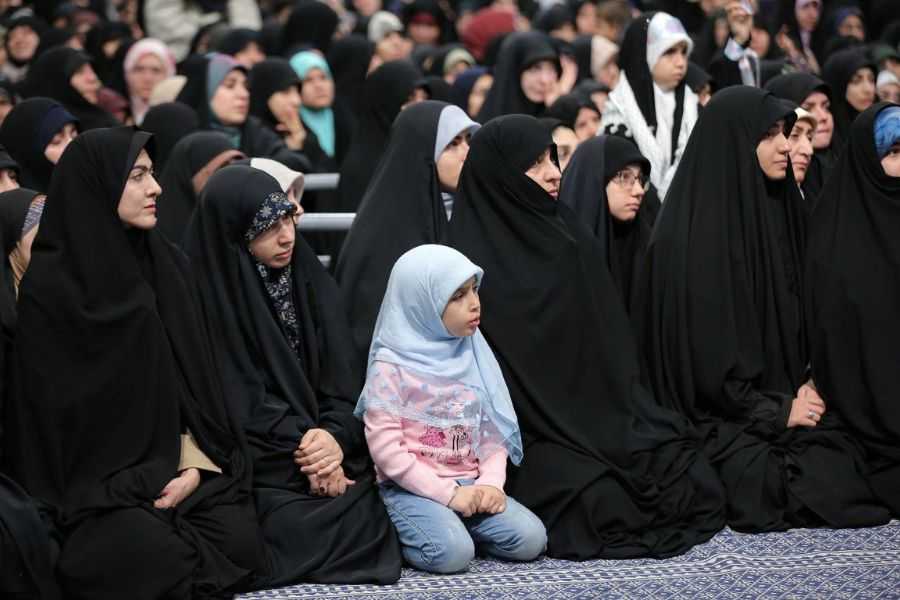
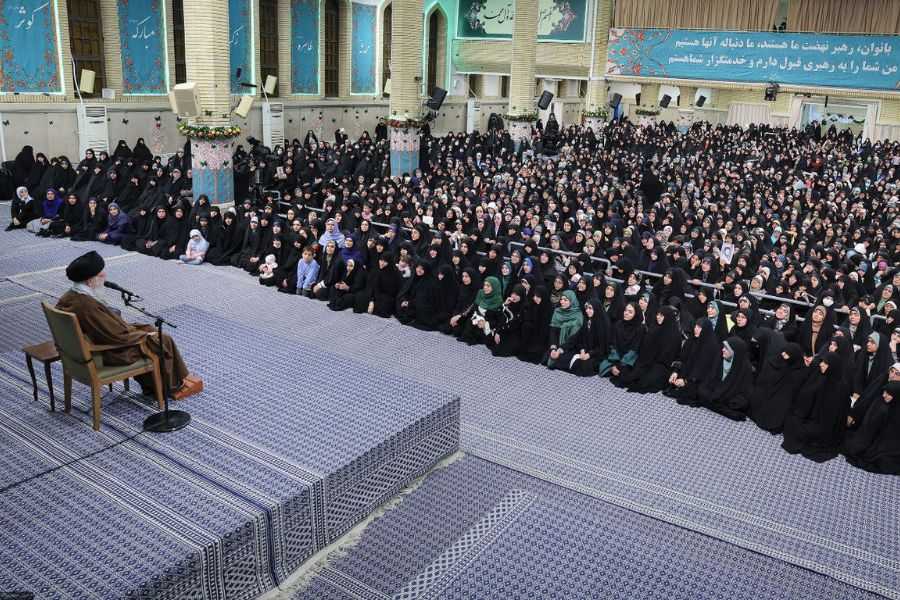
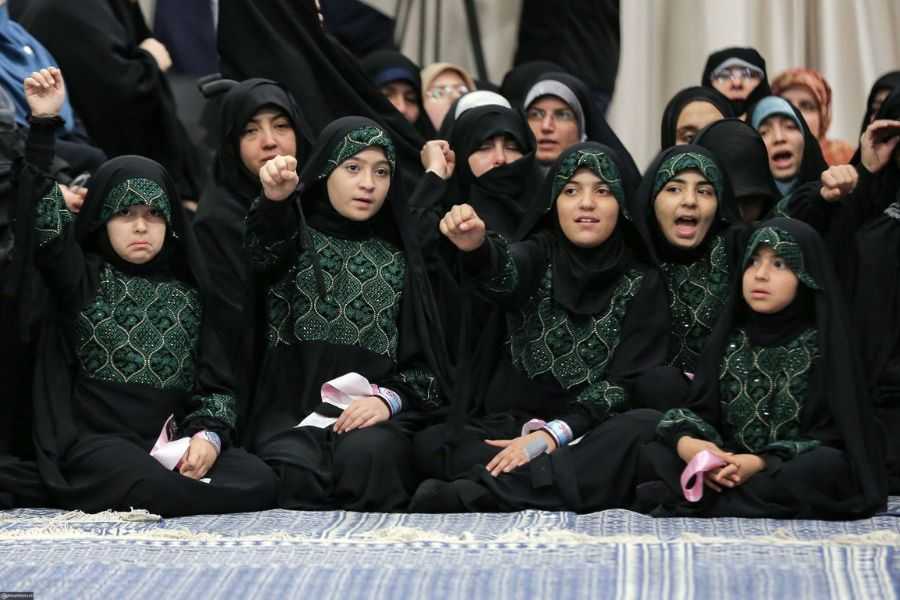
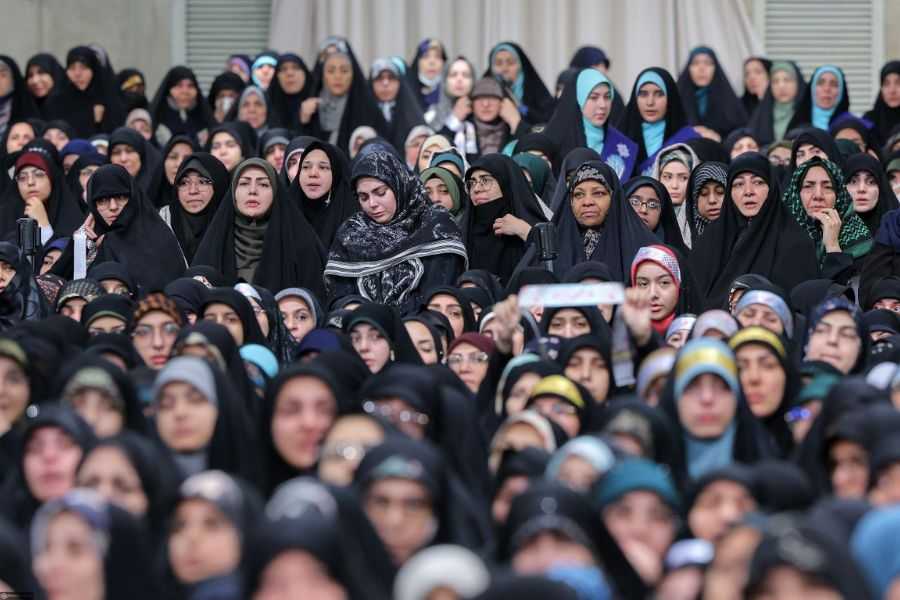
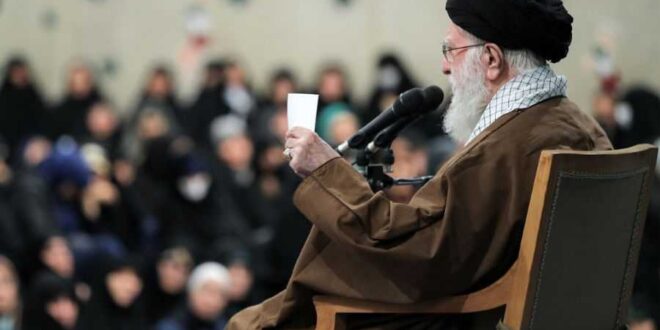
This morning, Grand Ayatollah Imam Sayyid Ali Khamenei met with thousands of women and girls from various regions of the country. During the meeting, he reviewed Islam’s perspective on the status and rights of women in the home and in society, clarifying what behaviors are appropriate and inappropriate for men toward their wives and women in different spheres.
He described Lady Fatimah al-Zahra (peace be upon her) as a virtuous personality possessing the highest qualities in all aspects of life.
Imam Khamenei pointed to the boundless virtues of the Lady of the Worlds in “worship and humility, altruism and sacrifice for others, patience and endurance in hardships and calamities, courageous defense of the oppressed, enlightenment and clarification of truths, political understanding and action, household management, marital life, child-rearing, and participation in important historical events in early Islam,” among other areas. He stated that “Iranian women, praise be to God, learn from this shining star whom the Prophet (peace and blessings be upon him and his family) described as the leader of all the women of the worlds throughout all eras, and they strive to realize her goals and guidance.”
His Eminence described the status of women in Islam as lofty and exalted, adding: “The Qur’anic expressions regarding the identity and personality of women are among the most refined, elevated, and progressive expressions.”
He referred to Qur’anic verses that speak of “the equality of men and women in human life and history, and their equal potential for growth in attaining spiritual perfection and high ranks,” stating that all of these points contradict the misconceptions of those who possess religion but have not truly understood it, as well as those who have not accepted religion at all.
Imam Khamenei also explained the Qur’anic logic regarding women’s rights in society, affirming that Islam grants women rights equal to men in social activities, business, political participation, access to most governmental positions, and other fields. Their spiritual conduct and individual and collective progress are open to advancement and flourishing.
He emphasized that the decadent Western culture and capitalist culture are completely rejected from an Islamic perspective. He added: “In Islam, in order to preserve the dignity of women and regulate powerful and potentially dangerous sexual desires, there are restrictions and rulings concerning interaction between men and women, dress codes for both, women’s hijab, and the encouragement of marriage. These are fully compatible with women’s nature and the true interests and needs of society, whereas in Western culture there is absolutely no control over unlimited and destructive desires.”
He considered men and women in Islam to be balanced elements who share many similarities, with some differences arising from physical and natural distinctions. He stated that these “complementary elements” play a vital role in managing human society, ensuring the continuation of the human race, advancing civilization, meeting societal needs, and organizing life.
Within this vital role, he stressed that establishing a family is among the most important tasks, adding: “Contrary to the neglect of the family institution in flawed Western culture, Islam guarantees defined and mutual rights for women, men, and children as the elements that form the family.”
Women’s Rights in Islam Surpass Any Flawed Western Logic
In another part of his speech regarding women’s rights, Imam Khamenei stated that “justice in social and family treatment” is the foremost right of women, emphasizing the responsibility of the state and all members of society to ensure this right.
He added that “preserving security, respect, and dignity” is among women’s fundamental rights, noting that Islam places utmost importance on honoring women, in contrast to Western capitalist culture, which transgresses the bounds of women’s human dignity.
He referred to a hadith of the Prophet Muhammad (peace and blessings be upon him and his family) describing a woman as a “flower” rather than merely a “worker in household affairs,” explaining that this perspective entails protecting and caring for women without reproach or rebuke, so that they may fill the home with their colors and fragrance.
He noted that the Qur’an twice presents two believing women—Mary and Asiya (the wife of Pharaoh)—as examples for all believing men and women, demonstrating the importance of women’s thought and action. He said that women’s social rights—such as equal pay with men for the same work, insurance for working women or female heads of households, special leave provisions for women, and other rights—must be respected without discrimination.
He affirmed that the most important right and need of a woman in the home is “the husband’s affection,” citing a hadith that advises men to express love and show their feelings toward their wives. He added that another major right of women in the home is “the prohibition of all forms of violence against them” and complete avoidance of common Western practices such as the killing or beating of women by their husbands.
He further emphasized other rights of women, such as “not being forced to carry out household duties,” “the husband’s support in overcoming the hardships of childbirth,” and “providing opportunities for scientific and professional advancement.” He affirmed that the woman is the manager and caretaker of the home, and it is society’s duty to appreciate her skillful household management despite limited income and rising prices.
He highlighted the difference between capitalist and Islamic theories regarding women, explaining that Islam grants women independence, capability, identity, and the possibility of progress, whereas the capitalist view imposes dependency on women, absorbs their identity into that of men, disregards their dignity, and treats them as material instruments for pleasure and desire, as seen in recent crimes committed in America as a result of this thinking.
He also considered the “destruction of the family institution,” the emergence of problems such as fatherless children, weakened family ties, gangs targeting girls, and the spread of immorality under the name of freedom as major sins caused by capitalist culture over the past two centuries. He explained that the West labels these numerous actions as “freedom,” although in reality they amount to enslavement.
He added that the West insists on exporting its flawed culture to the world, claiming that restrictions imposed on women, such as hijab, hinder their progress. However, he stated that the Islamic Republic has invalidated this flawed logic and demonstrated that a Muslim woman committed to hijab can be active in all fields, even more so than others.
He praised the unprecedented achievements of Iranian women throughout history in the fields of science, sports, thought, research, politics, society, healthcare, and caregiving, as well as their continuous support for their martyred husbands. He emphasized that Iran has never before witnessed such a number of female scholars and intellectuals, and that the Islamic Republic has been the cause of women’s progress in all major fields.
Finally, Ayatollah Khamenei warned the media against promoting flawed Western thinking about women. He stressed that when discussing hijab and cooperation between men and women, domestic media should not repeat Western narratives but rather present and develop Islam’s profound and effective perspective both domestically and globally, as the best means of spreading Islam and attracting people—especially women—to it.