 WILAYAH NEWS VOICE OF THE GLOBAL AWAKENING


Related Articles

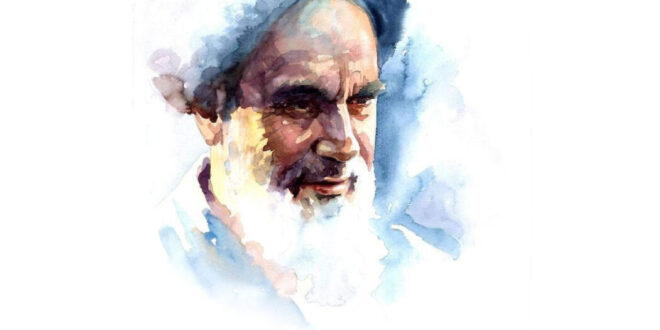
Imam Khomeini’s (may his secret be sanctified) View of the Status of Women in Islam.
Imam Khomeini’s (may his secret be sanctified) View of the Status of Women in Islam
The Imam (may his secret be sanctified) paid great attention to the issue of women, to the extent that he designated a special day for them to be renewed every year, so that their issues, rights, and activities would always remain present. He said:
“Blessed be the great Iranian nation, especially the محترم women, on the blessed Day of Women — the glorious day of that radiant jewel who was the foundation of human virtues and the lofty values of ‘God’s vicegerency’ in the world.” [1]
He chose for women one of the most honorable days in human history and one of the dearest days to his heart: the birthday of Lady Fatimah al-Zahra (peace be upon her). That perfect human being, whom he described as “the foundation of human virtues and lofty values.” Choosing this particular day for women was not a coincidence; rather, it achieves two purposes at once.
On the one hand, it highlights the importance of women and their essential role in society — a role embodied by Lady al-Zahra (peace be upon her) in its most magnificent form, most complete state, and highest degree. On the other hand, it is the day of the righteous and perfect role model for women. The day from which women set forth each year is the day of Lady al-Zahra (peace be upon her), so that she may represent the example that should be presented to women, and whose path and light women should follow.
All of this points to the importance of women and their lofty status in the view of Imam Khomeini (may his secret be sanctified), and consequently in the view of authentic Islam.
What Islam Has Offered to Women
“Islam served women in a manner unprecedented in history. It rescued women from that mire, honored them, and made them human beings with dignity and personality.” [2]
“Islam did not serve men in the way it served women. You do not know what the condition of women was in the Age of Ignorance, and what it became in Islam.” [3]
According to material standards, it was not easy for that great man to stand among the people of the Age of Ignorance and proclaim:
“And when the female infant buried alive is asked, for what sin she was killed.” [4]
Within a few short years, this noble Prophet — through a miracle and divine support — was able to transform that rigid society which had usurped women’s rights and despised them, to the point of physically burying them alive after having already buried their status spiritually and reducing them to a source of corruption in society.
Islam transformed a society described in the Qur’an as:
“And when one of them is given news of a female (child), his face darkens, and he suppresses grief. He hides himself from the people because of the evil of what he has been given news of. Shall he keep her in humiliation or bury her in the dust? Unquestionably, evil is what they decide.” [5]
— into a society where:
“Paradise lies beneath the feet of mothers,”
“Fatimah is the mother of her father,”
and “The best of children are the sheltered daughters; whoever has one, Allah makes her a shield for him from the Fire,”
as reported in the noble Prophetic traditions.
This is only part of what Islam offered to women from the very beginning of its ظهور.
This service to women does not benefit women alone; rather, it is a service to all humanity and to society as a whole. The Imam (may his secret be sanctified) said:
“Islam bestowed a great favor upon humanity by delivering women from the oppression in which they were submerged during the Age of Ignorance. In their view, she was lower than an animal and was oppressed. Islam was the one that rescued her from the swamp of ignorance.” [6]
With every absence of Islam from society throughout history, the status of women declines; and with every renewed radiance of Islam, her status rises again in society, returning her to her humanity.
“Today, women — this active member of society — have regained their status, to some extent, by the blessing of the Islamic revival.” [7]
From the book: Women in the Thought of Imam Khomeini (may his secret be sanctified) – Islamic Cultural Knowledge Association
References:
[1] Short Sayings, p. 285.
[2] Speech dated 9/11/1978.
[3] Speech dated 9/11/1978.
[4] Qur’an, Surah al-Takwir (81:8–9).
[5] Qur’an, Surah al-Nahl (16:58–59).
[6] Speech on the occasion of Women’s Day, 6/5/1979.
[7] Speech on the occasion of Women’s Day, 5/5/1980.