From the thoughts of the martyred leader
June 23, 2026
-Culture الثقافة
16 Views
## Chapter 1: Media
– Importance of Media
– The Goal of Media
– Biased Media
– Integration between Media and *Tabligh* (Religious Propagation)
—
## Importance of Media
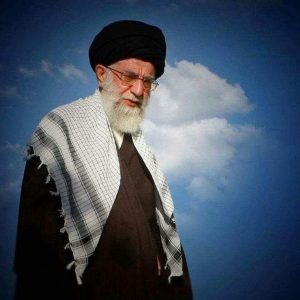
Imam Khamenei, may his shadow endure, discusses the media in this era and its importance, which has significantly surpassed the means that preceded the age of media. He says:
> “The most effective and efficient means in our era is the media; newspapers, television, and radio are more influential in the world today than books because they broadcast whatever they want on the airwaves.” (1)
Naturally, airwaves are more accessible, easier, and less costly for people. This is the crux of the problem that intellectuals discuss today regarding people’s distance from books and reading; listening to a radio, for example, is possible in the car, at work, or while busy with other matters, whereas reading a book requires specific conditions and dedicated, independent time. This is in addition to the economic aspect, as many people cannot afford to buy books, not to mention the lack of public libraries that cover the actual need.
Furthermore, the words of Imam Khamenei imply the most prominent point: that humans are by nature more comfortable with visual and auditory stimuli than with reading. Since visual and auditory media are generally dominant, it is natural for them to prevail in their influence over people.
—
## The Goal of Media
The most prominent goal of media, as indicated by Imam Khamenei, is to raise the cultural level of the people and convey correct Islamic thought, including moral and social awareness that leads the Islamic society in general toward goodness and righteousness. He says:
> “The general trend of the press must be toward reforming public culture, and the institutions specialized in matters of propagation and media must exert their efforts in the direction of reforming public culture.” (2)
When a film is produced that contains moral content or provides guidance indirectly, the desired goal of the media in its cultural and instructional aspect is achieved. He says:
> “Films must be produced to reform general Islamic culture. Radio and television must always work for the sake of public culture.” (3)
—
## Biased Media
In the introduction, we pointed out the exploitation of media by deviant forces, harnessing it to serve their base purposes and whims. The most prominent example of this is the forces of Global Arrogance—the American and Zionist powers—which control many media networks around the world to practice deception and use dirty methods of indirect guidance, attack nations that threaten their hegemony, twist facts, and employ other such tactics.
Imam Khamenei warns against these media outlets and alerts us all to the malicious roles they try to play in our societies and nations. He focuses on three of their biased methods:
### 1. Skepticism (Creating Doubt)
The aim here is to raise questions and fallacies about the centers of strength and truth in Islamic countries, especially regarding the points of strength in the Islamic system of governance, most notably the issue of *Wilayat al-Faqih* (Guardianship of the Jurist). This skepticism is not limited to this issue alone but extends to everything that unites the nation, making it a single hand, and causing people to doubt the credibility of those responsible for serving them. It also twists facts. Imam Khamenei refers to this reality, saying:
> “Know, my dear ones, that the first thing media does against countries is to cast doubt on the credibility of the true centers of truth and purity within them; they cast doubt on the nature of the work of honest media outlets, raise suspicions about the personalities of believing people, heap accusations upon this person or that, create hesitation in people’s hearts, corrupt minds, and twist the facts.” (4)
Among the examples used by hostile and biased media in twisting facts is the use of double standards in evaluating democracies in different countries. In countries that are politically aligned with American interests, executions are considered a virtue, even for minor issues that do not deserve such punishment. Furthermore, massacres committed against innocent people are considered “self-defense.” They portray nations that possess nuclear weapons and are established unjustly on the land of another nation as “oppressed,” while anyone who tries to obtain even a part of their right and wrest it back from them—even by defending their right by throwing a stone—is labeled a first-degree terrorist. Conversely, in countries that resist American hegemony, American media highlights execution cases in a way that shows this as a dangerous violation of human rights, even if the death sentences are for just causes. He says:
> “In the logic of American media and the Zionist media network, the execution of heroin smugglers in Iran is a violation of human rights, but kidnapping people in Lebanon, bombing villages, and shooting displaced people fleeing their villages does not harm human rights at all.” (5)
### 2. Cultural Pollution
Another dangerous method focused on by biased media outlets—sponsored by countries attempting to dominate the world—is the issue of polluting the original cultures of these countries. Whoever abandons their own culture to follow another culture leaves behind the most important thing that elevates their nation to positions of strength. There is no clearer evidence of this cultural pollution—which biased media broadcasts into people’s minds—than the emergence of many who brag day and night about questioning religious and social issues that correspond to human nature and conservative traditions, to the point that they do not hesitate to describe them as “ossified” or “backward.”
One of the worst examples indicating attempts to culturally pollute the nation is presenting Western countries with ideals that have no reality other than in movies. Thus, segments of the youth move away from the Islamic model that ensures happiness for the human being. Imam Khamenei points to these meanings:
> “A lot of media and political noise by foreign media outlets is made to disturb the peace of the country and create cultural pollution, in order to prevent people from knowing the circumstances and to make the needs of the time and the nation forgotten. The enemy’s goal of this noise is to occupy people’s minds.” (6)
—
## Integration between Media and *Tabligh* (Religious Propagation)
No matter how far media reaches in the field of guidance and instruction, it does not mean that it will replace the role of *Tabligh* that originates from the mosque and the scholar. Media, despite its great influence on human souls, cannot possess the same sanctity as *Tabligh* through the scholarly pulpit in mosques and *husseiniyahs*. In this regard, Imam Khamenei points to two fundamental points concerning the relationship between media and *Tabligh*:
### 1. The Need for Both
He says:
> “None of the media and artistic methods or what is provided by news agencies can take the place of *Tabligh*. I do not want to say that *Tabligh* is a substitute for them, but they also do not substitute for *Tabligh* in its style and method.” (7)
Neither *Tabligh* in the media age is capable on its own of performing the complete role in building societies on religious foundations, nor is media alone, without the propagators, scholars, mosques, and pulpits, capable of performing the complete function. The relationship between them is primarily one of integration.
He says:
> “*Tabligh* today has the same dangerous role. Let no one imagine that the existence of radio, television, video, and other modern devices cancels the role of the pulpit, or that someone says: religious *Tabligh* in the known form has no role in the modern era. The influence left by a person’s speech in a gathering where the speaker stands face-to-face with his audience and speaks to them on an appropriate topic is undoubtedly a great influence, and it differs from the influence of any other media method. This type of *Tabligh*, which is characterized by divine blessing and is face-to-face, is of utmost importance.” (8)
### 2. *Tabligh* and Developing Media
*Tabligh* can be a supporter of the media and a guide in media direction. Thus, *Tabligh* benefits from media tools, and the media benefits from the cultural guidance of the propagators on occasions where cultural guidance should be carried out as necessary. The Imam says:
> “Let one of the goals of *Tabligh* be the development of Islamic media for the purpose of guiding people.” (9)
—
## Media Freedom
There is much talk these days about media freedom and its limits. Western media often clings to this issue to attack Islamic countries, accusing them of restricting media outlets, especially in the Islamic Republic. Regarding this issue, Imam Khamenei says:
> “The press can raise the awareness of the masses regarding their responsibilities and alert officials to their dangerous tasks. But if the opposite happens, the press here leads to inciting uproar, tension, ambiguity, and division, and misleading both sides from their basic duties.” (10)
The freedom that Imam Khamenei gives to the media is the freedom that leads to integration in the civilizational construction of the country, where the press and media convey the image to the official and the people alike, leading to clarifying errors and striving to correct them.
However, granting this degree of freedom to the media does not mean that freedom and its slogans should be used to broadcast things that corrupt society, or attack sanctities, or infringe upon the dignity of others. There is a vast difference between the two matters. Imam Khamenei points to this, saying:
> “The task of the press is a goal that requires a means to achieve it, and that means is freedom. Freedom of the press must be a means to perform the task of the press, not for the task of the press to become a victim of absolute, dissolute freedom.” (11)
—
## Western Media and Alleged Freedom
Western media boasts of many illusory slogans it carries, including the slogan of freedom, which it has used in the worst possible way. They have even reached the point of boldness to insult the Noble Messenger Muhammad (PBUH). Conversely, they raise hell if anyone questions the alleged Nazi Holocaust. He says:
> “According to this freedom of expression, it is not possible to show any skepticism about the myth of the Jewish Holocaust or to deny it, but it is permissible to insult the sanctities of more than 1.5 billion Muslims.” (12)
As evidence of this biased mentality favoring the Zionist side, which is controlled by the arrogant powers, Imam Khamenei mentions an incident that happened to him at the beginning of the Islamic Revolution in Iran, saying:
> “One time, I sent one of Imam Khomeini’s statements to America to be published in American newspapers because they are widely circulated, as they claimed. However, the American newspapers that brag about freedom were not prepared to publish that statement on their pages, even though those who wanted to publish that statement were ready to provide a large sum of money—several thousand dollars—to publish it. But all the newspapers there stubbornly refused to publish that statement on their pages. This is the freedom claimed by the enemy press.” (13)
—
**References:**
1. Closing the proceedings of the fourth session of the Assembly of Experts, 29 Jumada al-Thani 1421 AH, Tehran.
2. 11 Safar 1416 AH.
3. 11 Safar 1416 AH.
4. Birth of Imam Hussein (PBUH), Day of the Islamic Revolutionary Guard Corps, and Basij Week, 3 Sha’ban 1419 AH, Tehran.
5. Hajj season 1419 AH, 1 Dhu al-Hijjah 1419 AH, Mecca.
6. Address upon receiving commanders and personnel of the Air Force.
7. Arrival of the blessed month of Ramadan, 23 Sha’ban 1418 AH, Tehran.
8. On the eve of the month of Muharram, 24 Dhu al-Hijjah 1418 AH, Tehran.
9. Start of the academic year in the Seminary, 22 Rabi’ al-Awwal 1413 AH.
10. 3-12-1414 AH. (Press owners and media workers).
11. 3-12-1414 AH. (Press owners and media workers).
12. Speech upon meeting with a group of commanders and personnel of the Air Force, 7-2-2006.
13. 3-12-1414 AH. (Press owners and media workers).
 WILAYAH NEWS VOICE OF THE GLOBAL AWAKENING