WILAYAH NEWS VOICE OF THE GLOBAL AWAKENING


Related Articles

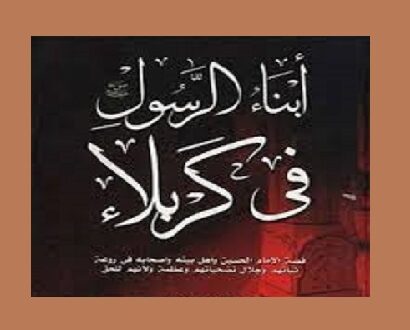
The Sons of the Messenger of Allah (peace and blessings be upon him and his family) in Karbala
Abu Bakr said: “You withheld the zakat.”
She replied: “The matter is not as you claim; rather it was such and such. Even if the men, as you allege, withheld the zakat from you, then why were the Muslim women taken captive?” ([45])
In another narration, this woman reveals the reality of the war that was waged against them. Outwardly, it appeared to be the enforcement of Abu Bakr’s decision to collect the zakat and transfer it to his authority to spend according to what he deemed necessary—contrary to the practice of the Messenger of Allah (peace and blessings be upon him and his family), who would spend it on the poor among Banu Hanifa so that the wealth would circulate among them.
Khawla al-Hanafiyyah, when she went to the grave of the Messenger of Allah (peace and blessings be upon him and his family), addressed him saying:
“Peace be upon you. These are your community; they have taken us captive like the captives of the Turks and Daylam. By Allah, they had no sin except their inclination toward your Household. Thus, a good deed was turned into a sin, and a sin into a good deed—so we were taken captive…” ([46])
Accordingly:
It becomes clear from this that Muslims had become accustomed to enslaving Muslim women after Abu Bakr established that precedent—until the matter escalated to one of its greatest tragedies on the Day of Ashura. Following in Abu Bakr’s footsteps came Yazid ibn Mu‘awiya and ‘Ubayd Allah ibn Ziyad, resulting in scenes unparalleled in history since Allah chose Adam through to Muhammad (peace and blessings be upon him and his family).
Allah the Exalted says:
“Indeed, Allah chose Adam, Noah, the family of Abraham, and the family of ‘Imran over all the worlds—descendants, some of them from others. And Allah is All-Hearing, All-Knowing.” (3:33–34) ([47])
[45] Al-Khara’ij wa al-Jara’ih by al-Rawandi, vol. 2, pp. 563–564; Bihar al-Anwar, vol. 41, pp. 302–303.
[46] Musnad al-Imam al-Rida (peace be upon him) by Shaykh ‘Aziz Allah ‘Attaridi, vol. 1, p. 117.
[47] Surat Aal ‘Imran, verses 33–34.
Chapter Three
The Meaning of the Divine Will, and Does This Will Nullify Divine Punishment?
(This page is blank in the printed edition.)
The presence of women in Karbala—when studied within the military history of the Arabs and Muslims—represents a distinctive, unique, inspiring, and foundational presence that established new theological and existential principles unknown to humanity before Karbala and unlikely ever to be replicated thereafter. This is due to the elements gathered in Karbala, chosen by divine will to serve as a central محور (axis) for this الأمة (community) in the construction of creed and reform.
From here, we find that when Imam al-Husayn (peace be upon him) was confronted by Muhammad ibn al-Hanafiyyah as he set out toward Iraq, questioning him about the reason for taking the women along, he replied:
“Allah has willed to see them as captives.”
His statement was not merely to silence the questions that seemed apparent in Ibn al-Hanafiyyah’s mind—questions he chose not to express openly but summarized by asking: “Why do you take these women with you?”
Rather, though brief in the outward historical narration (which suggests it silenced him), Imam al-Husayn (peace be upon him) was in fact unveiling one of the greatest truths connected to this uprising.
How similar this statement is to Allah’s words to the mother of Moses when fear and confusion overcame her regarding what to do with her son:
“And when you fear for him, cast him into the river and do not fear nor grieve. Indeed, We shall return him to you and make him one of the messengers.” (28:7) ([48])
One might ask: which of the two situations was greater? If the one cast into the sea was but a single individual, then the sons of Muhammad (peace and blessings be upon him and his family) were cast into the trenches of spears, laid upon the blades of arrows, and embraced the swords.
Was the son of Fatimah returned to his mother whole and unharmed—or returned dismembered? To Allah belongs the command before and after.
Yet the effects and outcomes achieved by this uprising were no less significant than the casting of Moses into the sea—if not greater in many respects. How many Pharaohs and tyrants did al-‘Aqilah Zaynab (peace be upon her) shatter in their thrones until the Day of Resurrection? How much defense of monotheism and rejection of polytheism was established by the noble woman whom Imam al-Husayn (peace be upon him) brought forth? Not to mention the defense of wilayah (divinely ordained leadership) and prophethood, and the restoration of Islam to the path set for it by Allah and His Messenger (peace and blessings be upon him and his family).
Accordingly, the reader may feel the need to clarify the meaning of the “divine willing” (mashi’ah) mentioned at the beginning of Imam al-Husayn’s statement:
What is the difference between mashi’ah (divine willing) and irada (divine will/intention)?
And does divine willing imply the removal of punishment from the killers because Allah willed that they be seen as captives?
The answer lies in several points:
[48] Surat al-Qasas, verse 7.