WILAYAH NEWS VOICE OF THE GLOBAL AWAKENING


Related Articles
By Robert Maillard
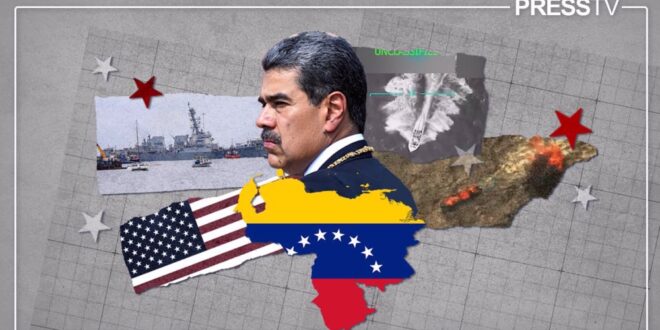
What has just happened in Venezuela is not a simple event. It is a message to the entire world — all those countries that reject the Western hegemonic project.
In the early hours of Saturday, the US kidnapped Nicolás Maduro, the democratically-elected president of Venezuela, on alleged charges of “narco-terrorism” after carrying out a series of missile and drone strikes in Caracas.
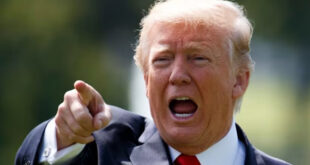
In a tweet and then at a press briefing, US President Donald Trump claimed responsibility for the attack, which is in brazen violation of international law, comparing it to the 1989 kidnapping of former Panamanian president Manuel Noriega, before stating that Washington “will temporarily manage Venezuela.”
But the real shock came immediately afterward. Trump announced the entry of major American oil companies to exploit the Latin American country’s vast oil reserves, considered the largest in the world. In other words, the IS kidnapped the head of a sovereign state in order to seize its oil.
Immediately, many countries condemned the blatant aggression: Brazil, Mexico, Chile and Colombia spoke of violations of sovereignty, while Iran and Russia denounced an armed aggression against a sovereign state.
China, for its part, expressed serious concern over the kidnapping of the head of state and demanded the immediate release of Maduro. The United Nations spoke of a dangerous precedent set by the US government.
In Africa, South Africa strongly condemned the assault and warned that unilateral use of force threatens the world order. Burkina Faso expressed clear solidarity with Venezuela, denouncing the violation of the UN Charter.
But not everyone has condemned this scandalous violation of international law. In Europe, the self-proclaimed “cradle of democracy,” Italian Prime Minister Giorgia Meloni and French President Emmanuel Macron defended the kidnapping act, while they have been looking for excuses to condemn Russian actions in Ukraine.
The Venezuelan vice president strongly slammed the kidnapping of the country’s President Nicolas Maduro by the US, stressing that Maduro is the only president of Venezuela.
Follow: https://t.co/mLGcUTSA3Q pic.twitter.com/pFPdsRO9hz
— Press TV 🔻 (@PressTV) January 4, 2026
Javier Milei, the maverick Argentinian president, welcomed the US violation of international law, so did the Israeli regime.
It then becomes clear that something is changing. Indeed, Trump did not hesitate to warn that what happened on New Year’s Day in Venezuela could happen in other countries as well, including Mexico, Cuba and Colombia. And that is the real issue.
In other words, what is at stake here is not so much the fate of the Venezuelan leader himself as the outright trampling of international law, in the sense that one state can overthrow another in the name of criminal law while carrying out a hold-up on its resources and warning that others will follow. If this precedent is normalized, then no country will truly be safe.
As early as Monday, two major developments are expected that could tip the world order and decide the future of international relations: a possible trial of Maduro in the US and a meeting of the UN Security Council.
The fact that Maduro could be brought before a US court means that a foreign power is arrogating to itself the right to judge and impose its own law on a head of state—and beyond that, on an entire nation.
Then, the convening of the UN Security Council raises a central question: has the United States violated international law? Have Americans just created a precedent at the risk of seeing it adopted by the rest of the world? If so, how should one respond?
For many countries, the issue is no longer the fate of Maduro, legitimately elected by the Venezuelan people, but rather the method used by the Americans — a method that scorns the UN Charter, according to which state sovereignty is a fundamental principle and the use of force is strictly regulated.
“Venezuelans feel that their sovereignty has been violated”
Press TV’s Gladys Quesada from Caracas reports on the latest developments and reactions regarding US aggression in Venezuela.
Follow Press TV on Telegram: https://t.co/LWoNSpkJSh pic.twitter.com/XLCpC8al0h
— Press TV 🔻 (@PressTV) January 3, 2026
Yet the American military aggression against Venezuela, which reportedly claimed 40 lives, also acknowledged by the US media, benefited from neither a clear UN mandate nor a context of declared war. It is a unilateral action carried out by the war mafia occupying the White House, in the pure tradition of the “Cowboys”: abduct the leader of a sovereign state, secure the resources, and mock international law.
At his press briefing, Trump compared this affair to that of Manuel Noriega, Panama’s leader in the late 1980s, who was also falsely accused in 1989 of drug trafficking, then kidnapped and tried in the US. But is this comparison valid? Of course not.
At the time, the world was far less multipolar. There was no China as a global power, no comparable strategic rivalry, and little international pushback. The operation was criticized, but it did not disrupt the world order. In today’s multipolar world, however, the situation is entirely different.
The January 3 kidnapping operation by Delta Force in Venezuela creates a dangerous precedent which, if accepted, will become a geopolitical tool. What could happen next? Force will be justified by “interest,” strategic resources will be brought into the equation, and, above all, other powers may draw inspiration from it.
Therefore, the question that arises is this: Does the world accept that force now takes precedence over law? On Monday, with the possible trial and the UN meeting, this question will no longer be abstract. It will be formally put before the entire world.
Robert Maillard is a Paris-based writer and military analyst. The article was originally published in French on Press TV’s French website.