WILAYAH NEWS VOICE OF THE GLOBAL AWAKENING


Related Articles
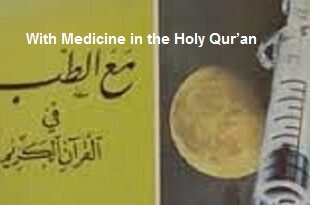
With Medicine in the Holy Qur’an – Dr. Muhammad Ali Al-Bar
If it reaches the uterus, it is a mass of small, ribbed cells known as the morula, as it resembles a mulberry in its external segmentation. Soon, the surface cells of this mass separate from the inner cells and take on a columnar shape. The function of these cells is to provide nourishment, and they are called trophoblast cells. At this point, the product of conception becomes capable of implantation, as the trophoblast cells extend their projections into the uterine lining. The process of implantation lasts for twenty-four (24) hours, thus concluding the stage of the formation of the ‘alaqah (the clinging form).
One may not fully appreciate the magnificence of the Qur’anic depiction of this stage unless one has observed that cellular mass clinging—clinging, not merely adhering—by means of those projections embedded in the uterine lining. It is fitting here to reflect on the verses that remind the human being of those moments when he was a cellular cluster clinging to the wall of his mother’s womb, deriving from it warmth, nourishment, and shelter. Thus, in the very first surah revealed of the Qur’an, which the Almighty named Al-‘Alaq, He says:
“Read in the name of your Lord who created (1), created man from a clinging form (‘alaq).”
(Al-‘Alaq: 1–2)
—from the ‘alaqah to the mudghah:
“Then We created the clinging form into a chewed-like lump (mudghah).”
(Al-Mu’minun: 15)
After implantation, the mudghah stage begins in the third week, with the formation of the embryonic disc, originating from the embryoblast cells—the cells that remain after the separation of the trophoblast. The embryonic disc initially consists of two layers: an outer layer (ectoderm) and an inner layer (endoderm). Then a third layer forms between them, the mesoderm. Until the end of the fourth week, there is no differentiation of any organ or system, and this stage may be called the undifferentiated mudghah.
The pregnancy then passes through its most delicate and difficult stages. From the fifth week onward, the embryonic disc composed of the three germ layers undergoes a series of purposeful and astonishing tissue changes known as differentiation—or, as the Qur’an calls it, “creation” (takhalluq). Each group of cells from these layers undertakes the formation of one of the body’s organs or systems, within a framework of integration and coordination among these systems as they grow and develop, so that the human being may be formed in the best of forms.
The process of differentiation is completed approximately by the end of the third month. At that time, the embryo measures about 10 cm in length and weighs around 55 grams. This stage may be called the differentiated mudghah. Thus, the mudghah stage passes through two phases: the first, in which no organ or system has yet formed—the undifferentiated mudghah; and the second, in which the various systems are differentiated—the differentiated mudghah. In this way, the miraculous nature of the Qur’an becomes clearly evident in its description of the mudghah stage:
“Then from a mudghah, formed and unformed.”
(Al-Hajj: 5)
The puzzling enigma:
As we speak of differentiation, an important question inevitably arises: how can the embryoblast cells—identical in structure—give rise to these three different germ layers (inner, outer, and middle)? And how can identical cells within each layer produce organs that differ in structure, function, and characteristics?
For example, from the ectoderm arise the brain, nerves, the epidermis of the skin and its appendages such as glands and hair, and the mucous membranes of the mouth and nose. From the mesoderm arise the heart and blood vessels, blood, bones, muscles, kidneys, the dermis of the skin, and part of the endocrine glands. From the endoderm arise the lining of the respiratory tract, the digestive tract, the thyroid gland, the parathyroid glands, the liver, and the pancreas.
Yes—how did all this come to be? Who directed these weak, identical cells to produce centers of thought, sensation, and creativity? Who enabled them to form factories for blood, sugars, and proteins? Who endowed them with systems of adaptation and comfort, and means of protection, safety, and security within the body?
It is an enigma that has perplexed—and continues to perplex—scientists throughout the world, until they realize that the Creator and Director of life is God. And when they finally reach the solution to this mystery, they will be even more convinced that He is:
“Allah, the Creator, the Originator, the Fashioner; to Him belong the most beautiful names. Whatever is in the heavens and the earth glorifies Him, and He is the Almighty, the All-Wise.”
(Al-Hashr: 24)
We are filled with wonder when we see that the Qur’an has alluded to this enigma in verses that serve as beacons of guidance on the path of knowledge, and as incentives for continuous research and analysis. God says in Surah Al-Hajj:
“Then from a mudghah, formed and unformed.”
He further emphasizes this aspect in Surah Al-Mu’minun:
“Then We created the mudghah into bones, and We clothed the bones with flesh.”
This verse not only points to the beginning of bone formation before muscle formation, nor is it limited to the expressive realism in portraying the relationship between muscles and bones as one of clothing—for anyone who studies anatomy knows well how muscles surround bones as though they were their garment. Rather, in our view, it also points to the process of differentiation and creation that begins from that small mudghah:
“Then We created the mudghah into bones, and We clothed the bones with flesh.”
—Then We produced him as another creation (the fetal stage). After the third month, the product of conception tends to increase in weight, and the systems that have formed strive toward integration. Some systems even begin functioning during fetal life, such as the heart and the digestive system, while the bone marrow begins producing blood elements.
In general, the most important developments occurring after the third month are: movement, heartbeat, independent endocrine secretion by the placenta, rapid growth in fetal size, and completion of the external form.
As for movement, it begins at the end of the third month and the beginning of the fourth, when the nervous system connects with the organs and muscles. The pregnant woman feels the active movements of her fetus in the fourth month, or earlier in women who have previously given birth. Heartbeats begin after the start of the fourth month and can also be heard, becoming clear in the fifth month. Dr. Falak Al-Ja‘fari mentions that one Egyptian professor sought to record the first heartbeat, and when the recorder’s sensor began to move, he said: “Here is God”—that is, “Here is the power of God.”