WILAYAH NEWS VOICE OF THE GLOBAL AWAKENING



Related Articles
# Divine Imamate and Guardianship:
## The Secret of Karbala’s Eternal Legacy
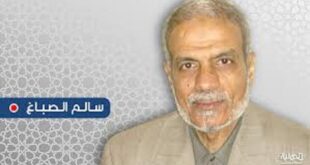
**By الأستاذ سالم الصبّاغ**
*(Translation into English)*
**In the Name of God, the Most Gracious, the Most Merciful**
Praise be to God, Lord of the worlds.
Peace and blessings be upon the noblest of messengers,
our master Muhammad and his pure and purified Household.
Peace be upon Husayn,
and upon Ali ibn al‑Husayn,
and upon the sons of Husayn,
and upon the companions of Husayn.
—
The greatest problem that befell the Muslim community after the passing of the Noble Messenger (peace and blessings be upon him and his family) was the denial of the guardianship (wilayah), imamate, and succession of Ali ibn Abi Talib (peace be upon him). This amounted to a denial of the very concept of divinely ordained leadership, despite the clear Qur’anic verses and authentic narrations concerning it — including the well‑known hadith:
> “Whoever dies without having a pledge of allegiance upon his neck dies the death of ignorance.”
> *(Sahih Muslim)*
Or in another wording:
> “Whoever dies without knowing the Imam of his time dies the death of ignorance.”
Have people reflected upon this hadith? Millions of Muslims have died without knowing their Imam or pledging allegiance to him — and this continues. What then is their condition? Who bears the burden?
The divine caliphate was denied despite the prophetic tradition:
> “The caliphs after me will be twelve.”
If this narration alone were pondered, it would become clear that the only school that consistently adhered to it — by recognizing, pledging allegiance to, and following twelve Imams — is the school of Ahl al‑Bayt (peace be upon them). Where, then, do you turn?
The issue is not merely ignorance of one Imam, but ignorance of twelve divinely guided Imams — though this number appears in their own major hadith collections. What is the ruling regarding those who denied them? What of those who fought and killed them?
Why did the Prophet (peace be upon him and his family) say:
> “Do not return after me as disbelievers, striking the necks of one another”?
What, then, of the first generation who fought one another — who rose against Ali (peace be upon him), the Imam of their time?
In light of this, we may better understand the Qur’anic verse:
> “Muhammad is but a messenger; messengers have passed away before him. If he dies or is killed, will you turn back on your heels?” (3:144)
What caused the community to turn back?
Was it not the same matter that led to war against Amir al‑Mu’minin Ali (peace be upon him) in Jamal, Siffin, and Nahrawan — until he was struck down in prayer?
Was it not the same cause that led to the poisoning of Imam Hasan (peace be upon him)?
And was it not the same cause that compelled Husayn (peace be upon him) to rise, shedding his pure blood to expose the great conspiracy against Islam, against the Ahl al‑Bayt, and against the divine institution of Imamate?
—
## The Secret of Karbala’s Immortality
The eternal legacy of Karbala lies in the personality of the divine leader — the infallible Imam, the Master of the Youth of Paradise, the beloved grandson of the Seal of the Prophets. He is the manifestation of the Divine Names, the heart and soul of this world. His love is obligatory upon the community; none is excused in ignorance of him.
Karbala endures because Imamate is a lofty spiritual station affirmed in the Qur’an — from the vicegerency of Adam and the angels’ prostration before that divine office, to the Imamate of Abraham, which was granted to him after prophecy and after severe trials.
Imamate, as described in the Qur’an, is a divine covenant. It is not a worldly authority, but a sacred trust from God.
Thus, Husayn’s sacrifice was not merely political — it was a defense of the divine covenant.
The Prophet said:
> “Husayn is from me, and I am from Husayn. God loves whoever loves Husayn.”
Is not the killing of Husayn, according to this narration, an assault upon the Messenger himself?
Husayn is the secret behind Ashura and Karbala.
Ashura is time.
Karbala is place.
Both were shaped by Husayn.
Islam is not merely scripture and tradition; it is also infallible leadership that preserves, interprets, and safeguards the message. This is the meaning of the hadith of the Two Weighty Things (al‑Thaqalayn):
> “The Book of God and my Ahl al‑Bayt.”
The infallible method and the infallible guide.
Had the nation truly known Husayn, they would not have dared to kill or abandon him.
—
## Husayn’s Call to Recognition
Before the battle began, Imam Husayn addressed the opposing army:
> “Consider who I am. Reflect within yourselves. Is it lawful for you to kill me?
> Am I not the son of your Prophet’s daughter?
> The son of his successor and cousin, the first believer?
> Is not Hamza the Master of Martyrs my father’s uncle?
> Is not Ja‘far al‑Tayyar my uncle?
> Did you not hear the Messenger of God say about me and my brother:
> ‘These two are the leaders of the youth of Paradise’?”
He called them to recognize him — to know their Imam.
But they did not.
The result was Karbala.
Is there a greater ignorance than this?
From the Prophet’s passing until today, the Ummah has remained in turmoil, conflict, and bloodshed — because it severed the link between heaven and earth: the system of divinely guided Imamate.
Husayn rose and sacrificed himself, his family, and his companions to rescue humanity from tyranny and falsehood.
His blood became “God’s cause” — and such a cause cannot be extinguished.
—
Return, may God have mercy upon you, to the Qur’anic verses and prophetic traditions concerning the virtues and stations of Ahl al‑Bayt, and the foretelling of Husayn’s martyrdom from the day of his birth. Reflect — and you will understand.
Peace be upon Husayn,
and upon Ali ibn al‑Husayn,
and upon the sons of Husayn,
and upon the companions of Husayn.