WILAYAH NEWS VOICE OF THE GLOBAL AWAKENING


Related Articles

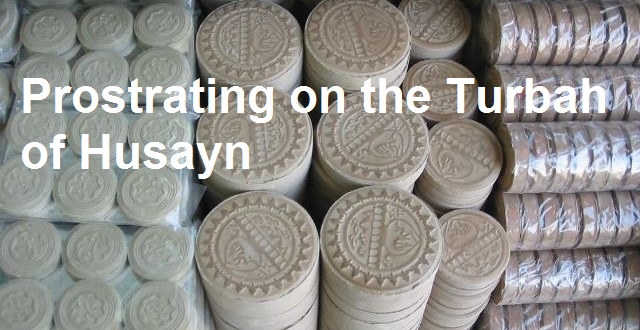
**Prostrating on the Turbah of Husayn – Sheikh Abdul‑Husayn Al‑Amini**
**04 – Prostration and What It Is Permissible to Prostrate Upon**
Making the earth a place of prostration: it is an agreed obligation upon the one who prays—among the entire Muslim community without exception—that he prostrates upon the earth. The hadith, *“The earth has been made for me a place of prostration and a means of purification,”* is well established and agreed upon. The imams of the legal schools are unanimous upon it. Therefore, when there is choice and possibility, there is no alternative but to prostrate upon the earth, or upon what grows from it, as will be discussed.
The practice of the early Companions—taking pebbles from the mosque when they became hot at midday and cooling them by turning them in their hands, as will be mentioned—indicates that nothing else was considered sufficient, even when the worshipper could manage to prostrate upon it only with effort or by removing the difficulty.
Likewise, the report that the Prophet (peace and blessings be upon him and his family) would spread a garment under his hands when the pebbles were extremely hot or cold—while no mention is made of spreading it in the place of prostration itself—supports the view that prostration is specifically upon the earth.
However, when prostration upon the earth is not possible due to intense heat or some other valid excuse, there is no prohibition at that time in prostrating upon something else, since necessities permit what would otherwise be restricted.
The narrations concerning prayer upon mats, palm‑fiber mats, small mats (khumrah), and similar items indicate the permissibility of prostrating upon what grows from the earth so long as it is not edible or wearable.
Prostration—being nothing but humility and submission before the greatness of the Almighty and the majesty of His grandeur—is most fitting when the earth itself is taken as the place of prostration, so that the worshipper places his cheek upon it and presses his nose into it. This reminds the one who prostrates before God of the humble clay from which he was created, to which he will return, and from which he will be brought forth again. In this way he reflects upon the lowliness of his origin, producing spiritual humility, inward submission, and a sense of modesty in the soul, driving the limbs toward servitude and restraining arrogance and egotism. He becomes aware that a creature made from dust is deserving only of humility and meekness.
Such meanings are not found in materials woven from wool, brocade, silk, and the like—things associated with comfort and luxury—which may give a person a sense of self‑importance, dignity, status, pride, and superiority, distancing him from humility and reverence.
Here we present to the reader all that has been reported in the **six canonical hadith collections** and other major compilations of traditions from the Sunnah of the Messenger of God (peace and blessings be upon him and his family) concerning what it is permissible to prostrate upon. We proceed in their light and adopt them as an authoritative practice and correct method from which there is no deviation. They fall into three categories.
**First Category: Reports indicating prostration upon the earth**
1. “The earth has been made for me a place of prostration and a means of purification.”
In a wording reported by Muslim:
“The whole earth has been made for us a place of prostration, and its soil has been made a means of purification when we do not find water.”
In the wording of al‑Tirmidhi:
“The whole earth has been made for me a place of prostration and purification,” reported from Ali, Abdullah ibn Umar, Abu Hurayrah, Jabir, Ibn Abbas, Hudhayfah, Anas, Abu Umamah, and Abu Dharr.
In the wording of al‑Bayhaqi:
“The earth has been made for me a purification and a place of prostration.”
And also in another wording:
“The earth has been made pure for me and a place of prostration; whoever among my community reaches the time of prayer should pray wherever he is.”
2. The Prophet (peace and blessings be upon him and his family) said to Abu Dharr:
“The earth is your place of prostration, so wherever the prayer time reaches you, pray.”
3. Ibn Abbas reported that the Prophet (peace and blessings be upon him and his family) prostrated upon a stone.
Narrated by al‑Hakim in *al‑Mustadrak* (3/473) and authenticated by him and by al‑Dhahabi.
4. Abu Sa‘id al‑Khudri said:
“My eyes saw the Messenger of God (peace and blessings be upon him) with traces of water and mud upon his nose.”
5. Rifa‘ah ibn Rafi‘ reported that the Prophet said:
“Then he says the takbir and prostrates, placing his forehead firmly until his joints are at rest and steady.”
Reported by al‑Bayhaqi in *al‑Sunan al‑Kubra* (2/102).
6. Ibn Abbas, Anas, and Buraydah reported with a sound chain from the Prophet:
“Three things are signs of harshness: wiping one’s forehead before finishing the prayer.”
In another wording from Wathilah ibn al‑Asqa‘:
“A man should not wipe the dust from his forehead until he finishes the prayer.”
7. Jabir ibn Abdullah said:
“I used to pray the noon prayer with the Messenger of God (peace and blessings be upon him), and I would take a handful of pebbles in my palm to cool them before prostrating upon them due to the intense heat.”
In another narration reported by Ahmad:
“We used to pray the noon prayer with the Messenger of God, and I would take a handful of pebbles in one hand and transfer them to the other until they cooled, then prostrate upon them due to the heat.”
In the narration of al‑Bayhaqi:
“I would take a handful of pebbles in my palm until they cooled and then place them beneath my forehead when prostrating due to the intense heat.”
Al‑Bayhaqi commented:
“If it had been permissible to prostrate upon a garment connected to the person, that would have been easier than cooling the pebbles in the hand and then placing them down to prostrate upon.”
(Reported in Musnad Ahmad 1/327 and *al‑Sunan al‑Kubra* 2/105.)
8. Anas ibn Malik said:
“We used to pray with the Messenger of God in severe heat, and one of us would take pebbles in his hand; when they cooled he would place them down and prostrate upon them.”
(*al‑Sunan al‑Kubra* 2/106)
9. Khabbab ibn al‑Aratt said:
“We complained to the Messenger of God about the burning heat on our foreheads and palms, but he did not grant us a concession.”
(*al‑Sunan al‑Kubra* 2/105, 107; *Nayl al‑Awtar* 2/268)
10. Umar ibn al‑Khattab said:
“It rained during the night, so we went out for the dawn prayer. A man would pass by the pebbled ground and place some pebbles in his garment to pray upon them. When the Messenger of God saw this he said: ‘How good this mat is.’ And that was the beginning of spreading pebbles.”
Abu Dawud also reported from Ibn Umar:
“One night it rained and the ground became wet, so a man would bring pebbles in his garment and spread them beneath him.”
(Abu Dawud 1/75; *al‑Sunan al‑Kubra* 2/440)
11. Iyad ibn Abdullah al‑Qurashi reported:
The Messenger of God saw a man prostrating on the fold of his turban, so he gestured with his hand: “Lift your turban,” and he indicated toward his forehead.
(*al‑Sunan al‑Kubra* 2/105)
12. Ali, the Commander of the Faithful, said:
“When one of you prays, he should remove the turban from his forehead.”
(*al‑Sunan al‑Kubra* 2/105)
13. Nafi‘ reported that Abdullah ibn Umar, when he prostrated while wearing a turban, would lift it until he placed his forehead on the ground.
(*al‑Sunan al‑Kubra* 2/105)
14. Ubadah ibn al‑Samit would remove the turban from his forehead when standing for prayer.
(*al‑Sunan al‑Kubra* 2/105)
15. Abu Ubaydah reported that Ibn Mas‘ud would not pray—or would not prostrate—except upon the earth.
Reported by al‑Tabarani in *al‑Mu‘jam al‑Kabir* and cited in *Majma‘ al‑Zawa’id* (2/57).
16. Ibrahim reported that he would stand upon a reed mat but prostrate upon the earth.
We asked: “What is a reed mat?” He said: “A mat.”
17. Salih ibn Haywan al‑Saba’i reported that the Messenger of God saw a man prostrating beside him while leaning on his forehead through his turban, so the Messenger of God uncovered his forehead.
(*al‑Sunan al‑Kubra* 2/105; *Nasb al‑Raya* by al‑Zayla‘i 1/386.)