From closing the Strait of Hormuz to bombing the Prince Hassan base in Jordan
3 days ago
News and analysis أخبار وتحاليل
11 Views
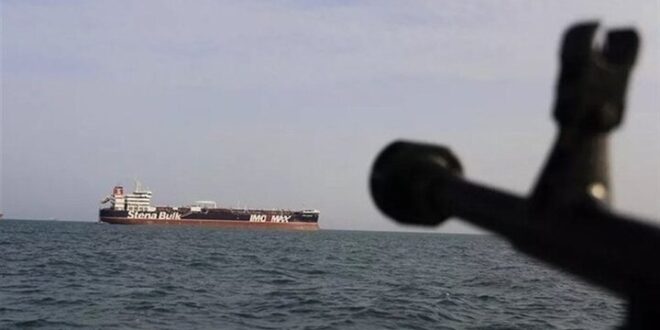
**At dawn on Sunday, the Iranian Revolutionary Guard Corps (IRGC) Navy announced the closure of the Strait of Hormuz until further notice, following the interception of two violating vessels in the waterway.**
The United States responded by launching airstrikes on Iran’s southern coastal regions, which were engaged by Iranian air defenses. Simultaneously, the IRGC Aerospace Force targeted US bases in Jordan and Qatar with ballistic missiles. These events have sparked a new round of clashes in the region.
### Closure of the Strait of Hormuz and IRGC Naval Actions
As part of its mission to maintain maritime security, the IRGC Navy intercepted two vessels that were traveling through unapproved routes and failed to comply with warnings, following the firing of warning shots.
The Public Relations department of the IRGC Navy announced that due to “illegal interference,” the Strait of Hormuz has been closed until further notice, and no vessels will be permitted to pass. This measure has significantly restricted traffic in one of the world’s most critical energy corridors and has impacted global markets.
### US Airstrikes on Southern Iran
The US Central Command (CENTCOM) announced the commencement of airstrikes. Multiple reports indicate that explosions were heard and air defenses were activated in the following southern provinces:
* **Khuzestan:** Areas of Abadan, Mahshahr, and Hendijan; air defenses were activated in Mahshahr.
* **Bushehr:** Explosions in Bushehr, Kangan, Deyyer, and Asaluyeh.
* **Hormozgan:** Bandar Abbas, Sirik, Qeshm, and Jask (with reports of multiple explosions).
* **Sistan and Baluchestan:** Air defenses were activated in Konarak and Chabahar.
### Iranian Missile Response to US Bases
The IRGC Aerospace Force executed a retaliatory operation, initially targeting the Prince Hassan Air Base in Jordan. According to the official statement, the operation destroyed the command and control center and hangars housing MQ-9 drones.
In the second phase, Al-Udeid Air Base in Qatar was struck by ballistic missiles, causing damage to fighter jet maintenance facilities and the base’s command center.
The IRGC warned that continued aggression would be met with even harsher responses. These attacks have led to a high state of alert at US bases in the UAE, Kuwait, Qatar, Bahrain, and Jordan, with reports of air defense systems being activated.
The events of last night reflect the ongoing tensions regarding control of the Strait of Hormuz. By closing the waterway and directly responding to bases hosting US forces, Iran has asserted its right to sovereignty and legitimate defense. The speed of these responses indicates high operational readiness. Strategically, the Strait of Hormuz remains a significant pressure point for Iran in the face of external pressure. Furthermore, targeting bases in Jordan and Qatar carries a clear message to the host nations.
Last night, the Persian Gulf witnessed a serious exchange of military actions. The Islamic Republic of Iran responded based on the defense of national security and sovereignty. Developments are being closely monitored, and each new step could alter the dimensions of the conflict.
 WILAYAH NEWS VOICE OF THE GLOBAL AWAKENING