WILAYAH NEWS VOICE OF THE GLOBAL AWAKENING


Related Articles


The Nuclear Clock and the U.S. Gamble Between Negotiation and Deterrence
February 26, 2026
Akram Bazi
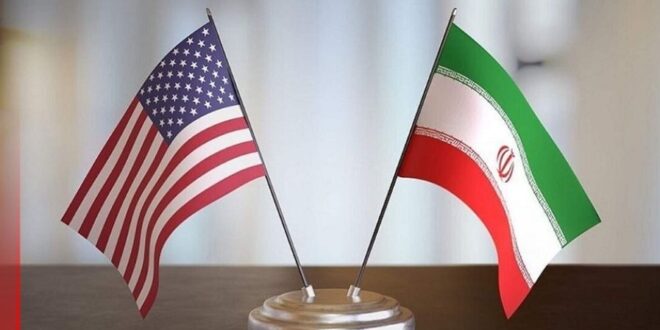
The political clock in the region is ticking faster as crucial negotiations between Tehran and Washington get underway. The nuclear issue is no longer just a technical matter lingering in the halls of the International Atomic Energy Agency, but has become a platform for testing the intentions of power between the Donald Trump administration and the Iranian leadership. Amidst an atmosphere charged with military escalation and intelligence ambiguity, the possibility of a direct meeting between U.S. envoy Steve Whitcroft and Iranian Foreign Minister Abbas Araghchi is emerging as a signal that could turn the table on confrontation scenarios, leading the region into a difficult diplomatic process driven by a language of mutual threats and the search for strategic victories under time pressure.
With this approach, the scene becomes more complex. Tehran entered the talks with high optimism, presenting a comprehensive proposal that would return its nuclear program to the commitments of 2015. This would essentially mean giving up its stockpile of uranium enriched above 3.67% and accepting a 2% enrichment level for civilian purposes. In contrast, Washington has not shown similar enthusiasm but has escalated its threats, with Donald Trump reaffirming that Iran must be prevented from acquiring nuclear weapons and discussing missiles that could threaten Europe, U.S. bases, and even U.S. territory in the future. Trump positions diplomacy as an option under a strict deterrence framework.
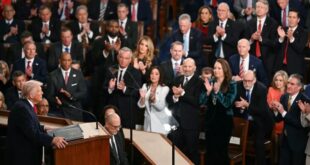
However, recent hours have seen a significant political and security escalation in Washington. Marco Rubio, in his capacity as Acting National Security Advisor, held a high-level classified briefing for the “Group of 8,” which includes senior leaders from both parties in Congress. This briefing came at a highly sensitive time, just before Trump’s State of the Union speech, where Rubio discussed possible military scenarios against Tehran if the diplomatic path fails. These developments raised widespread concerns within the Democratic opposition, with Senate Minority Leader Chuck Schumer making a brief statement warning that the situation is extremely serious. He called on the Trump administration to present its case publicly to the American people and not to keep military plans secret, cautioning that covert operations often lead to prolonged wars, tragedies, and heavy costs. Minority Leader in the House of Representatives Hakeem Jeffries also questioned the credibility of the official narrative, pointing to contradictions between Trump’s earlier claim that airstrikes had destroyed Iran’s nuclear capabilities and his current statements about the need for new strikes.
In the midst of this turmoil, the “Israeli” position emerges as a key pressure factor that never subsides. Tel Aviv watches the Geneva talks with suspicion and alertness, believing that any agreement that does not include the complete dismantling of Iran’s nuclear infrastructure and comprehensive restrictions on its ballistic missile program is simply giving Tehran more time. The Israeli government is pushing Washington to adopt a military option as the realistic approach on the table, emphasizing that it will not comply with any agreement that does not stop what it considers an existential threat. Israel is working hard to convince the Trump administration that Iran’s regional allies will remain a persistent threat unless the nuclear issue is tied to a complete end of Iran’s regional influence.
Parallel to these tensions, Russian Deputy Security Council Chair Dmitry Medvedev accused Britain and France of attempting to enable Ukraine to acquire nuclear capabilities, threatening a tactical nuclear response. This opened the door to speculation about the potential transfer of nuclear technology to Iran and its allies, among others. There were also reports of limited seismic activity in Iranian desert areas, which some linked to nuclear tests. However, such conclusions remain speculative and unproven scientifically, as natural seismic activity remains a possibility. Meanwhile, reports speak of a large-scale U.S. military buildup, including the arrival of F-16 and F-22 fighters in the region, though such deployments do not necessarily mean that the decision to go to war has been made. Engaging in conflict with Iran is vastly different from quick-strike operations, given the complexity of Iranian geography and the missile capabilities of Iran’s regional allies.
If the Geneva talks result in an agreement, Trump will announce a historic victory, claiming to have extracted concessions under the pressure of deterrence. However, if the talks fail, the region will enter a phase of open escalation, with the likelihood of multiple parties, including “Israel,” becoming involved, as Israel sees any partial agreement as insufficient for its security. Amid Iranian optimism, U.S. caution, and Russian escalation, the only certainty is that the region is on a delicate edge. As of now, there is no publicly available evidence that Iran possesses a strategic nuclear weapon, but in an environment where military signals intersect with diplomatic maneuvers, ambiguity itself becomes a tool of pressure. The situation is open to two possibilities: either an agreement that establishes a relative stability or a collapse that leads to a severe confrontation whose scope is unpredictable. Amid these complex calculations, Trump’s decision remains suspended on the assessment of his envoys, Steve Whitcroft and Jared Kushner, regarding Tehran’s seriousness in reaching a final deal.