WILAYAH NEWS VOICE OF THE GLOBAL AWAKENING

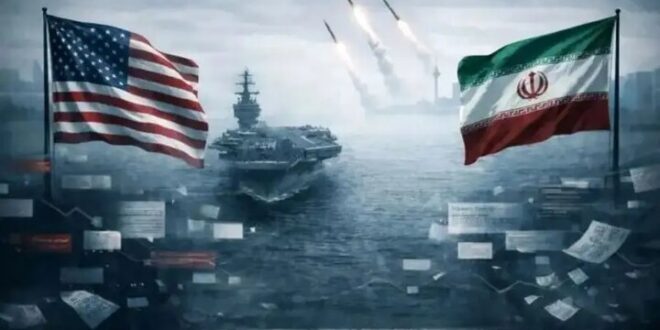

Related Articles


## Why Does the Strait of Hormuz Constitute a Strategic Tool for Iran?
Over the past decades, the Strait of Hormuz has been one of the most important geopolitical points in the world. At first glance it might appear to be merely a sea navigation route, but it plays a role in global security and economic equations that goes beyond being a maritime passage. Any change in its security situation can have repercussions extending far beyond the borders of the region.
**Mehr News Agency, International Affairs Section:** In recent months, a question has repeatedly emerged in the foreign media and analytical circles: Why does Iran insist on managing this strait and playing a role in it, refusing to abandon this strategic tool? The answer lies in a combination of historical, security, and geopolitical factors—factors that have made the Iranian view of this passage not merely economic, but part of the equation of national security.
From the Iranian perspective, the experience of recent years has proven that reliance on political agreements alone does not guarantee security. The withdrawal of Donald Trump’s administration from the nuclear agreement in 2018, the return of expanded sanctions, and then the escalation of military tensions all reinforced the conviction in Tehran that even international agreements, without enforcement mechanisms, can be affected by changes in the political circumstances in Washington.
This view was further strengthened after the US and Israeli military attack on Iran at a time when nuclear negotiations were ongoing. From Tehran’s point of view, this proved that negotiation alone does not prevent the use of military tools against it. Accordingly, maintaining capabilities that raise the cost of any military action against Iran has become one of the central pillars of its deterrence strategy.
*The New York Times* also addressed this issue in an analysis, writing that the calculations of Iran’s leaders regarding the Strait of Hormuz, in light of the experience of the American withdrawal from the nuclear agreement and the attack during negotiations, are simple: Tehran will keep this passage as a tool for obtaining guarantees and preventing the repetition of similar actions. The newspaper quoted Esfandyar Batmanghelidj, the economic analyst, confirming that Iran’s leaders have become pessimistic about the potential gains of diplomacy with the Trump administration, because past experience, from their point of view, has proven that an agreement without enforcement guarantees does not provide sustainable security.
The importance of the Strait of Hormuz to Iran is not limited to its geographic location alone; it is one of the few geopolitical tools that enables Iran to play an influential role in regional and international equations. A state facing economic pressures and military threats would naturally seek to maintain tools that enable it to confront external pressures.
In Iranian strategic logic, power is not confined to direct military capability. Rather, it is a set of political, economic, geographic, and security capabilities that allow the creation of deterrence. The Strait of Hormuz is one of the most important elements of this set, as it enables Iran to possess a balancing tool in confronting actors that are militarily present thousands of kilometers away from the region.
On the other hand, global sensitivity toward Hormuz has always made this passage a focus of interest for the great powers. Energy security constitutes a vital priority for many industrialized countries, and any disruption in this route can affect oil prices, transport costs, and global economic conditions. For this reason, even the *potential* threat concerning the future of this route carries importance for global markets.
This characteristic has made the Strait of Hormuz for Iran not merely a military tool, but also an instrument of political negotiation. Tehran believes that in a context where some powers use sanction tools, economic pressures, and military threats, Iran should possess capabilities to achieve balance.
However, the importance of Hormuz to Iran does not mean it is merely a short-term pressure tool. The position of this strait in regional equations forms part of a broader competition over the security order of the Persian Gulf. Iran always emphasizes that the security of the region should be ensured by the region’s own states, and that the presence of forces from outside the region does not achieve security, but may rather escalate tensions.
In contrast, the United States and some of its allies believe that military presence in the region is necessary to guarantee the free flow of energy and the security of navigation. This divergence of visions has been one of the principal roots of the strategic competition between Tehran and Washington over the past four decades.
Following recent developments, the importance of the Strait of Hormuz has increased in the calculations of both sides. The United States realizes that any large-scale military confrontation with Iran could have repercussions extending beyond the battlefield. The security of American military bases in the region, the state of the energy market, and the reactions of regional actors are all factors that Washington’s decision-makers must take into account.
On the other hand, Iran also realizes that the Strait of Hormuz is an internationally sensitive matter, and that any decision concerning it will have wide-ranging repercussions. For this reason, Tehran seeks to retain this capability within the framework of a deterrent tool, whose primary objective is described as raising the cost of any military action against Iran and achieving balance in the face of external pressures.
Under such circumstances, the fundamental question is not why Iran is unwilling to abandon this tool, but rather what factors have driven Tehran to conclude that retaining this capability is necessary. The answer lies in the experience Iran has gained from its relations with the United States over the past years—an experience that has proven, from Tehran’s point of view, that without reliable guarantees, even important political agreements can dissolve with changing circumstances.
As long as the security disputes between Iran and America remain unresolved, and no stable mechanism is established to prevent the return of military and political pressures, it is unlikely that Tehran will accept abandoning one of its most important geopolitical advantages. For Iran, the Strait of Hormuz is not merely a waterway, but a part of the equation of power, security, and deterrence—and it plays, in the view of Iranian decision-makers, an important role in maintaining balance in the face of external pressures.
—
Would you like any adjustments to the translation’s tone or style?