WILAYAH NEWS VOICE OF THE GLOBAL AWAKENING



Related Articles


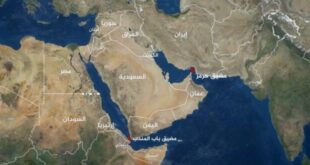
Yes, and this is a very important strategic point in understanding the future of the Strait of Hormuz. The Strait is not merely a route for oil and gas tankers; there is also digital infrastructure on its seabed, consisting of fiber-optic cables that connect the Gulf states to global Internet networks.
According to the International Cable Protection Committee (ICPC), there are currently five active segments of submarine cable systems that pass through the Strait of Hormuz itself, in addition to other systems in the surrounding area. Some of these connect to landing stations in the Gulf states, and there are also two cables that connect to Iran.
Why are these cables important?
These cables carry:
- Internet traffic between the Gulf, Asia, and Europe.
- International communications.
- Cloud-computing and data-center services.
- Banking and electronic payment services.
- Part of the data traffic of companies and government institutions.
Some of the major systems associated with the Hormuz region include:
FALCON, AAE-1, and the Gulf Bridge International Cable System (GBICS),
along with other systems.
But an important misconception needs to be corrected:
The Strait of Hormuz does not carry 99% of the world’s Internet traffic.
The roughly 99% figure refers to the share of global Internet traffic that travels through submarine cables in general. The share of international global capacity represented by cables specifically passing through Hormuz is less than 1%, according to the International Cable Protection Committee. Their impact is therefore highly significant regionally, rather than being capable of paralyzing the global Internet.
What about military cables?
This is where caution is necessary regarding information circulating publicly.
There is no reliable publicly available information confirming the existence of specific “secret military Internet cables” on the seabed of the Strait of Hormuz whose routes can be identified. Sensitive military cable routes are generally not disclosed for security reasons.
However, that does not mean that undersea military communications do not exist. Technically and strategically, government and military communications networks can use:
- Dedicated submarine cables,
- Fiber-optic infrastructure within civilian telecommunications networks,
- Terrestrial networks,
- Satellite communications,
- Or other military communications systems.
I cannot confirm the existence of any particular military cable in Hormuz without a reliable source.
More importantly, this brings us back to the earlier issue
This is where Iran’s statement that “Hormuz will not return to its previous state” becomes particularly significant.
Because control or influence over Hormuz in the future is not necessarily limited to ships.
There are effectively three strategic levels:
Oil and Gas
Energy tankers.
Trade
Container ships and cargo vessels.
The Digital Economy
Fiber-optic cables on the seabed.
And this is why the current war has raised serious concerns about the cables themselves.
Reuters has described Hormuz as a “digital chokepoint” as well as an energy chokepoint, noting that repairing cables during a conflict can become extremely difficult because of risks, mines, and the need for authorization.
It is also noteworthy that Iran reportedly discussed in May 2026 imposing fees on submarine cables passing through Hormuz, raising the question of whether Tehran is attempting to expand its concept of managing the Strait from control over shipping to the digital infrastructure on its seabed.
In my view, this is a particularly important point:
If Iran genuinely intends to establish a “New Hormuz,” the question is not only:
Who is allowed to pass over the water?
It is also:
Who is allowed to use the infrastructure beneath the water?