WILAYAH NEWS VOICE OF THE GLOBAL AWAKENING



Related Articles

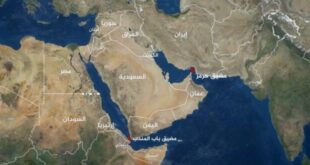
Yes. And if we look at the Strait of Hormuz as an integrated strategic system, rather than merely a maritime passage, I believe its importance consists of several layers, some of which are less well known than oil and trade.
1. Energy
This is the most well-known layer: crude oil, petroleum products, and liquefied natural gas. In the first half of 2025, approximately 20.9 million barrels per day of oil and petroleum liquids passed through Hormuz, equivalent to roughly 20% of global petroleum liquids consumption.
2. Maritime Trade
The Strait is not merely an “oil route”; it is the gateway between the Gulf, the Gulf of Oman, and the Arabian Sea. Cargo ships, container vessels, raw materials, and other forms of maritime commerce therefore pass through it.
3. Digital Infrastructure
This is the layer you referred to earlier and it is extremely important: submarine telecommunications cables.
Submarine cables carry more than 99% of international data traffic and support communications, the financial sector, cloud computing, and government communications.
For this reason, the seabed of Hormuz can be viewed as part of the digital infrastructure of the Gulf states.
4. Military Security
This is where the importance of Hormuz shifts from being primarily “economic” to becoming geopolitical and military.
The Strait is the gateway through which naval forces based in the Gulf access the Indian Ocean. Consequently, control over freedom of movement through the Strait affects:
- Naval forces.
- Aircraft carriers and their escort vessels.
- Supply and logistics ships.
- Surveillance and reconnaissance operations.
- Coastal and air-defense systems.
- The security of military bases located in the Gulf.
This makes Hormuz a military gateway as much as a commercial one.
5. Strategic Communications
There is a distinction between commercial Internet traffic and government, military, and strategic communications.
Even when there is no publicly identified military cable in a particular area, disruption to communications infrastructure can indirectly affect government institutions, economic activity, and command-and-control systems.
This is one reason submarine cables are considered critical global infrastructure.
6. Food Security and Essential Goods
This is a layer that does not receive enough attention.
The Gulf states rely heavily on imports to meet their food and essential-goods requirements. Therefore, disruption to maritime traffic does not merely mean higher oil prices; it can also affect:
Food → animal feed → fertilizers → industrial materials → consumer goods.
In other words, the impact of Hormuz can extend to the economic and social security of the states surrounding the Gulf.
7. Water and Domestic Energy Security
This is extremely important for the Gulf states.
Most countries in the region depend to significant degrees on desalination of seawater. Desalination plants require energy, materials, equipment, and spare parts, and many of these facilities are located close to the coast.
Therefore, maintaining maritime and energy security in the Gulf is also indirectly connected to water security.
Most importantly, there is an eighth layer
This is the one I believe could become increasingly important in the future:
Political influence and sovereignty over maritime traffic
This connects directly to what you were saying about Iran’s position.
If Hormuz moves from the concept of:
“An open international waterway in which navigation operates under the customary system”
to:
“An open strategic waterway, but one operating under security arrangements and procedures determined by the coastal states,”
then the strategic value of the Strait changes fundamentally.
The ability to permit, restrict, inspect, regulate traffic, and determine risks itself becomes a political instrument.
This is not merely a theoretical concept. Even economically, the 2026 crisis demonstrated that simply increasing the risks associated with transit and insurance can raise transportation costs to historic levels, even before considering a permanent closure.
The Strait of Hormuz can therefore be summarized by this equation:
Hormuz = Energy + Trade + Communications + Infrastructure + Military Security + Food Security + Water Security + Political Influence.
And this is precisely why I believe the statement “Hormuz will not return to its previous state,” if it means redefining the rules governing maritime traffic and security control, is far broader and more consequential than simply threatening to close the Strait.