WILAYAH NEWS VOICE OF THE GLOBAL AWAKENING


Related Articles

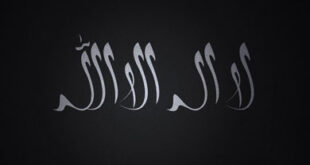
**(Bāgh wa lā ‘ād)** – “neither seeking it nor transgressing.”
(1) Meaning: he does not desire the carcass (dead meat) nor seek it while he can find something else. *“Nor transgressing”* means he does not exceed what satisfies his hunger. The root of **baghy** originally means envy. An oppressor is called *bāghī* because the envious person is unjust. From it comes the expression *“baghā ‘alayhi”* (he transgressed against him).
**Baghy** also means corruption, as in: *“Your transgression is only against yourselves”* (3), meaning your corruption is upon yourselves.
*“So he transgressed against them”* (4) means he acted arrogantly toward them and exceeded proper limits.
*“It is not appropriate for the Most Merciful”* (5) means it is not possible nor fitting for the Most Merciful to take a son. One says: “It is not appropriate for you to do such‑and‑such,” meaning it is not proper for you.
—
**(Baqā)**
*“The remainder of Allah is better for you”* (6) means what Allah has left lawful for you and has not forbidden is sufficient and satisfying for you, and that is better for you.
*“And a remnant of what the family of Moses and the family of Aaron left behind”* (7): in the Ark were fragments of the tablets that Allah wrote for Moses, the staff of Moses, his garments, and the turban of Aaron.
*“Possessors of discernment (ulu baqiyyah)”* (8) means people of distinction and obedience. One may say “so‑and‑so has *baqiyyah*,” meaning he has a virtue or merit for which he is praised.
**Al‑Bāqī** (The Everlasting) among the attributes of Allah refers to His essence, meaning the One who exists and whose existence does not come to an end.
*“Do you see any remnant of them?”* (10) means any remaining trace of them, or any surviving soul, or any remaining existence (like well‑being).
*“The enduring good deeds”* (11) refers to the five daily prayers. It is also said that they are the phrases: *Subḥān Allāh, Al‑ḥamdu lillāh, Lā ilāha illā Allāh, Allāhu akbar.*
—
**(Bakā)**
*“Bukiyyā”* (12) is the plural of *bākī* (one who weeps). Its original form was *bukūyā* on the pattern *fu‘ūl*, then the *wāw* was assimilated into the *yā*.
*“So neither the heaven nor the earth wept for them”* (13).
Ibn ‘Abbās said: there is no believer except that when he dies, the place where he used to pray and the gate through which his deeds ascended to heaven weep for him. It is also said that it means the people of heaven, with the word omitted. Another interpretation: the Arabs say that when a great person among them dies, the sky weeps for him and the sun is eclipsed because of his death.
(Ibn ‘Abbās: ‘Abdullāh ibn ‘Abbās ibn ‘Abd al‑Muṭṭalib, known as the scholar of this community and the interpreter of the Qur’an. A printed commentary is attributed to him. He lost his eyesight toward the end of his life and died in Ṭā’if in the year 68 AH.)
—
**(Balā)**
**Balā’** (trial) is the noun from *balāhu yablūhu*, meaning “to test him.” Allah says: *“Indeed, this is the clear trial”* (1), meaning the test; it is also said it means a blessing from *ablāhu*.
Trials occur in three forms: blessing, testing, and hardship.
*“We will surely test you”* means We will surely examine you.
*“And when his Lord tested Abraham with words”* (2) means He tested him with commands of worship over many years. It is also said they were ten practices:
Five relating to the head: parting the hair, using the tooth‑stick (siwāk), rinsing the mouth, sniffing water into the nose, and trimming the moustache.
Five relating to the body: circumcision, shaving the pubic hair, cleansing oneself after relieving oneself, trimming the nails, and plucking the armpit hair.
*“And he fulfilled them”* (3) means he performed them all and neglected none.
—
**(Banā)**
*“A solidly constructed structure”* (4): **bunyān** means a building or wall.
*“Build over them a structure”* (5). Ibn ‘Abbās said they built over him a wall of stones thirty cubits high and twenty cubits wide, filled it with fire, and threw him into it.
—
**(Bawā)**
*“And they incurred (returned with) wrath”* (6) means they returned with it; the expression is only used for something evil. One says *bā’a bi‑kadhā* when someone admits or returns with something.
*“So you would bear my sin and your sin”* (7) means you would return carrying the sin of killing me and your own sin for which your offering was not accepted, and thus you would be among the people of the Fire.
*“We certainly settled the Children of Israel”* (8) means We caused them to dwell there. It is also said it means We gave them a place of residence.
*Tabawwa’a al‑dār* means he settled in a house and made it his dwelling.
*“We will surely settle them in the world in a good place”* (1) — it is said this means We will grant them a good dwelling, namely Madinah, or that the Ansar sheltered and supported them.
*“Those who settled in the abode”* (2) refers to Madinah.
*“Assign houses for your people in Egypt”* (3) means build dwellings.
*“When you positioned the believers in stations for battle”* (4) means you arranged or settled them in their places.
*“He settles therein wherever he wills”* (5) means he resides in whatever place of that land he desires.
—
If you want, I can also **simplify this translation** or **turn it into clearer academic English**, because the original text is from a classical Arabic Qur’anic lexicon and its literal translation can feel dense.